Why Live Events Are B2B's Last Authentic Marketing Channel
80% trust events while 74% distrust social media. Four design principles and a measurement framework to turn that gap into pipeline.
I had a conversation with an event marketer last month that stuck with me. She’d just wrapped a 400-person customer conference for a mid-market SaaS company in Bangalore, and instead of talking about pipeline generated or leads captured, she said something I wasn’t expecting: “The most valuable thing that happened was a CFO telling our CEO, over chai, that he trusts us.”
That’s not a KPI you’ll find in your marketing dashboard. But it might be the most important one.
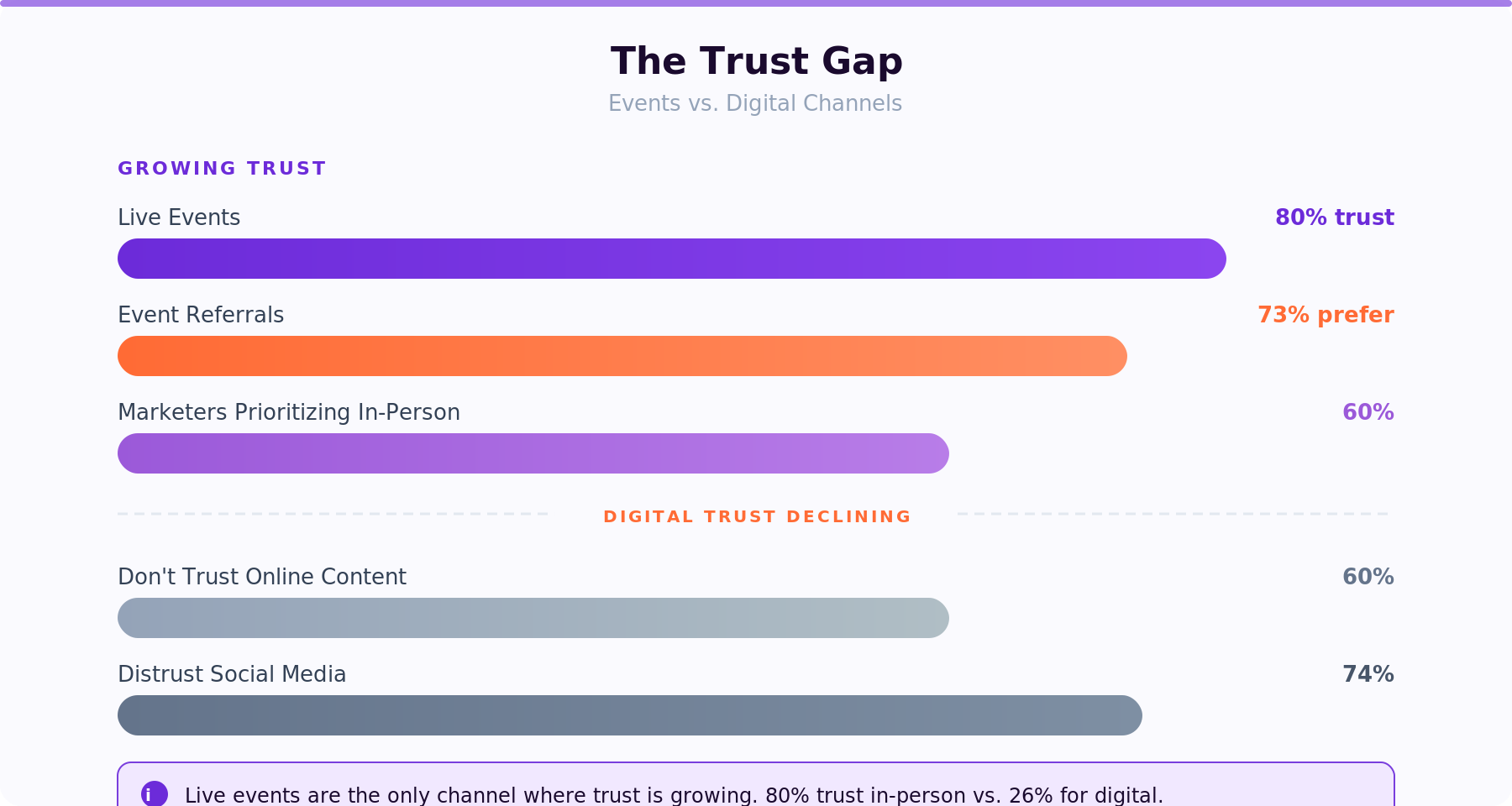
Here’s the uncomfortable context: nearly 60% of people no longer trust the authenticity of online content. AI-generated copy, synthetic images, fake reviews. Buyers have their guard up constantly. And 80% of respondents in Freeman’s latest research call live events their most trusted marketing channel. Up 5% from the year before.
That gap should get your attention.
We broke digital marketing. (And we know it.)
Let’s be honest about what happened. B2B marketing spent a decade optimizing for scale. More emails, more ads, more content, more automation. It worked for a while. Then generative AI came along and everyone suddenly had the ability to produce infinite content at zero marginal cost.
The result? Your buyers’ inboxes are overflowing. Every vendor sounds identical. Every LinkedIn post uses the same framework. 74% of people now identify social media as their least-trusted environment, per the Reuters Institute.
Buyers aren’t ignoring you because your copy is bad. They’re ignoring you because they can’t tell what’s real anymore.
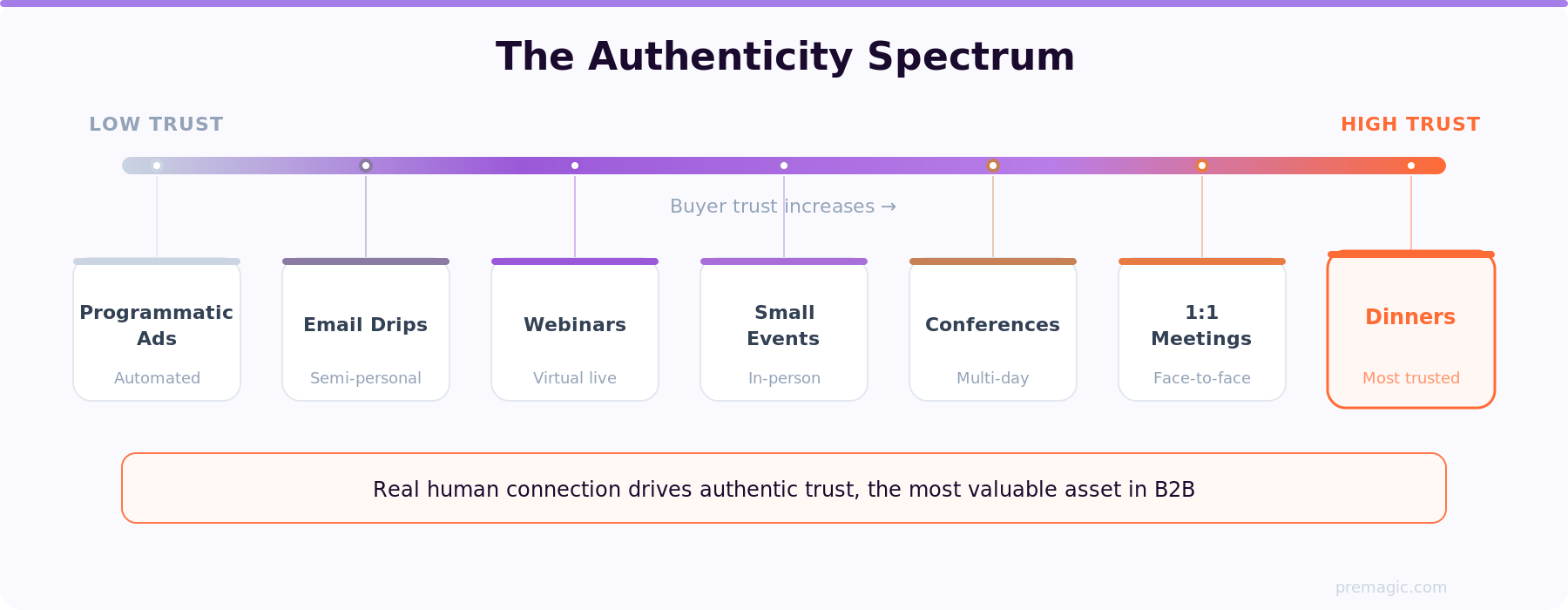
And that’s precisely where events have become something special. You can’t fake a handshake. You can’t automate a hallway conversation where two people discover they went to the same college. You can’t generate genuine human connection with a prompt.
The conversion data (and why it undersells events)
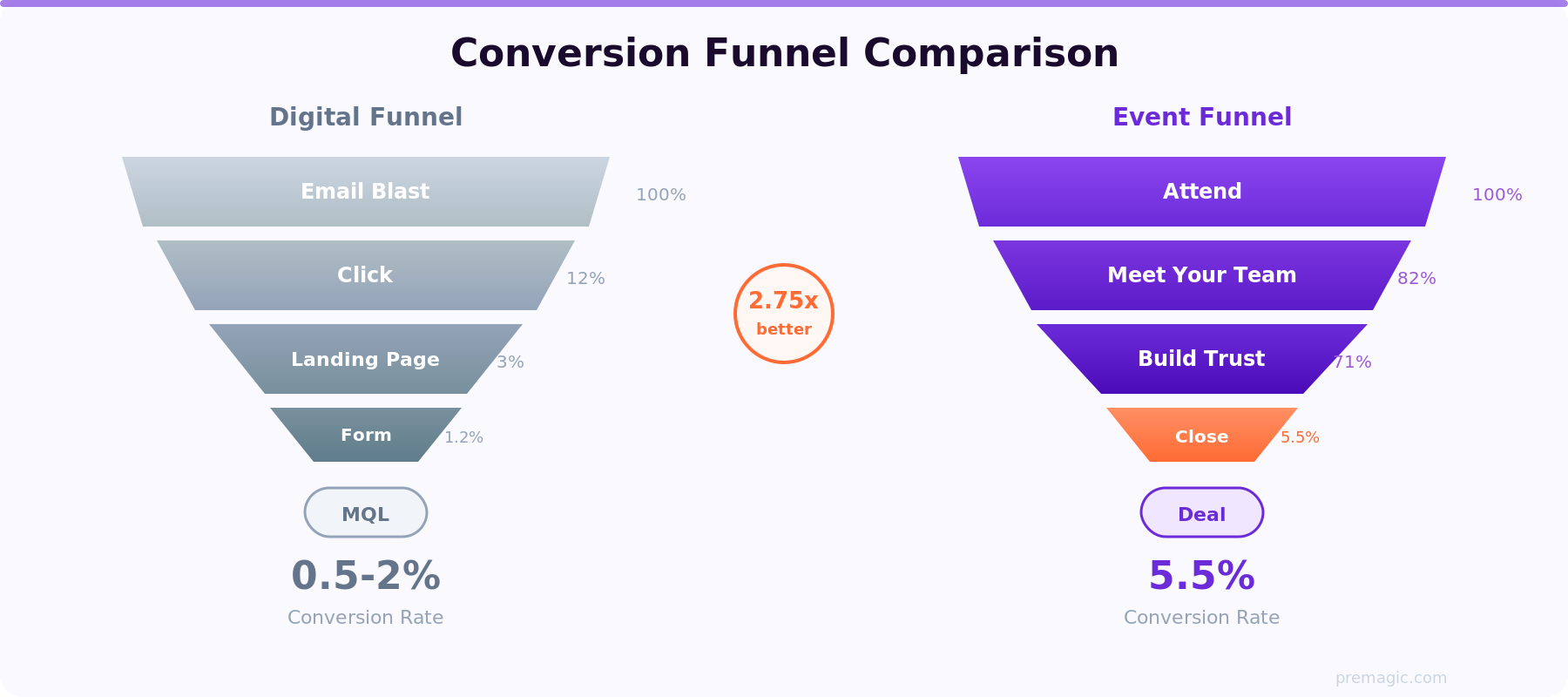
Live events convert at 5.5% from creation to qualified pipeline, which puts them among the highest-converting B2B channels. Good stat. But it misses the bigger picture.
What makes events different isn’t just conversion. It’s the kind of trust they build. When a buyer meets your team at a conference, they’re not evaluating a landing page. They’re watching your product lead fumble with a demo and recover gracefully. They’re noticing whether your team actually likes each other. They’re deciding if these are people they want to be stuck in a contract with for 18 months.
That matters because 73% of B2B executives prefer working with salespeople referred by someone they know. Referred leads close 69% faster. And events are the single best referral engine that exists. Someone meets your CEO at a dinner. They have a real conversation (not a pitch, an actual conversation) and three weeks later tells their procurement team, “Talk to these folks. They’re solid.”
No retargeting campaign on earth replicates that.
58% of attendees now say networking is their primary motivation for attending. That’s up from 39% in 2021. People aren’t showing up for the keynotes anymore. They’re showing up for each other.
So how do you actually design for trust?
This is where most event teams get it wrong. They know trust matters, but then they build an event that’s basically a three-day advertisement. Scripted panels. Rehearsed Q&As. A “networking hour” that’s really just people milling around with name badges and no conversation starters.
Here’s what actually works:
Ditch the script (and here’s how to sell it internally). The most trust-building moments at events are unscripted ones. Fireside chats where speakers genuinely disagree. Roundtables where an attendee admits, “We tried that and it failed spectacularly.” Give people permission to be honest, and the whole room relaxes.
If your VP insists on rehearsed keynotes, try this: keep the opening keynote polished (that’s your air cover), but replace one breakout session with a moderated “lessons learned” panel where speakers share real failures. Frame it to leadership as “customer voice programming.” Once they see the audience engagement scores from that session vs. the scripted ones, the conversation shifts fast.
Design for the margins. The best conversations happen in coffee lines, hallway clusters, and the walk between sessions. So make those moments longer. Add more breaks. Use smaller tables. Create shared experiences: a workshop, a challenge, something that gives strangers a reason to talk beyond swapping business cards. Networking tools that help attendees find and reconnect with the people they actually clicked with can turn hallway moments into lasting connections, instead of losing them to a pile of forgotten LinkedIn requests.
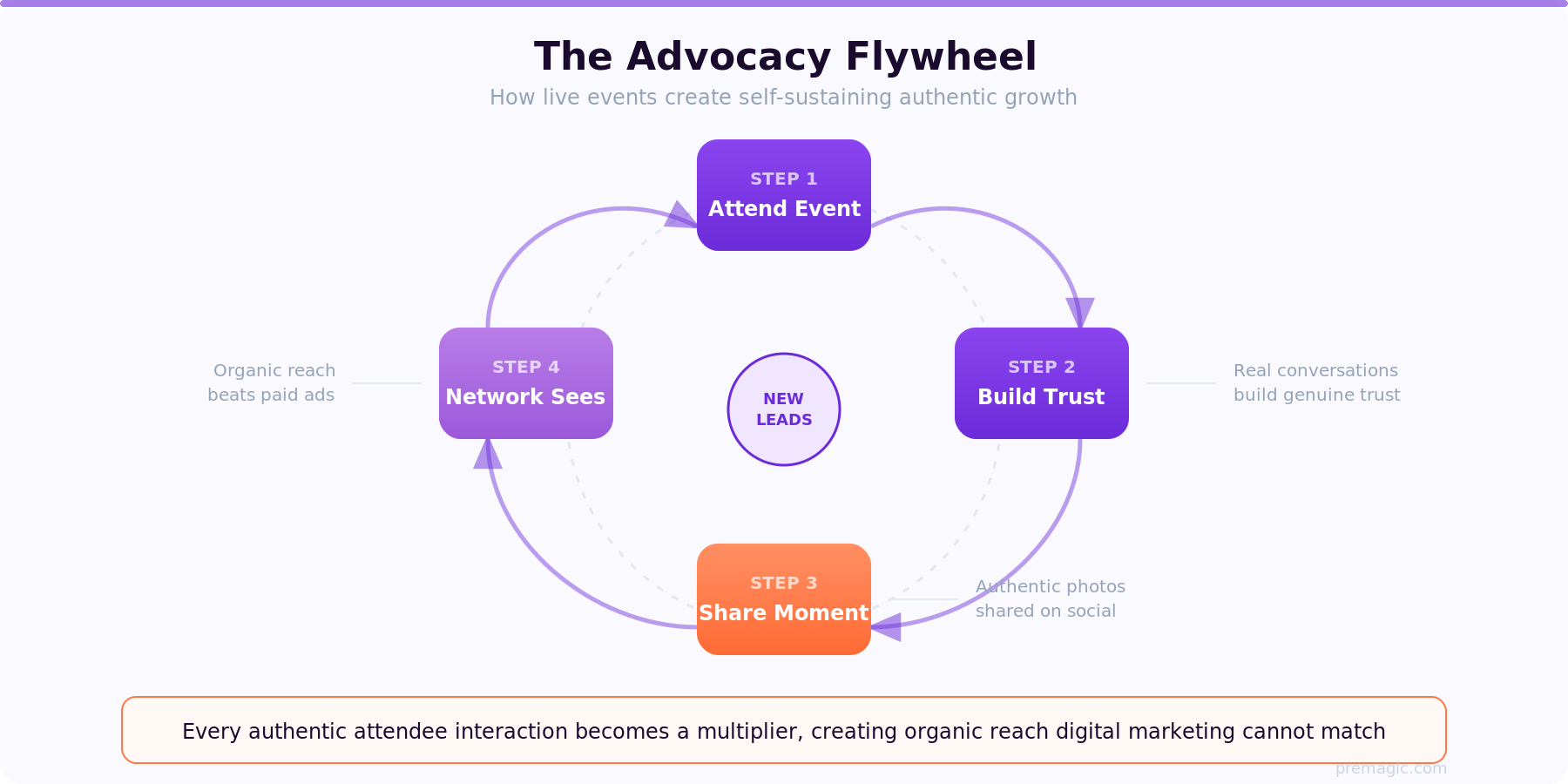
Let attendees tell the story, not your brand. Here’s something I’ve noticed: when an attendee shares an unpolished photo from your event (a selfie with someone they just met, a candid shot from a session) that post consistently outperforms anything your official brand account publishes. Because it’s real. AI-powered photo distribution makes this easier by getting the right photos to the right people instantly, so sharing becomes a one-tap impulse instead of a chore they’ll never get to.
Don’t blow it on the follow-up. If someone spent 20 minutes in a genuine conversation with your team and then gets a “Thanks for attending! Here’s our product sheet!” drip email, you’ve torched the trust you just built. Reference the actual conversation. Send something that’s useful to them, not to your pipeline. Be a person. A practical move: have your sales team log one personal detail from each meaningful conversation (not in CRM notes that feel like surveillance, just a quick note). Then use that in the first follow-up. “Hey, you mentioned your team is evaluating new vendors in Q3. Here’s a comparison framework we use internally that might help.” That’s trust compounding.
How do you measure trust? (Because your CFO will ask.)
If you’re going to argue that events build something traditional metrics miss, you need to offer an alternative way to measure it. Here’s a simple framework that works:
Post-event relationship NPS. Don’t just ask “How was the event?” Ask attendees: “How likely are you to recommend our company to a peer?” That’s a direct trust proxy, and tracking it across events gives you a trendline your leadership team can understand.
Referral velocity. Track how many inbound leads mention a specific event or a person they met there. This is the advocacy flywheel in action: someone meets your team, tells a colleague, and that colleague shows up in your pipeline with context you didn’t create. If you’re not tagging these in your CRM, start now.
Deal velocity for event-sourced pipeline. Compare time-to-close for deals where the buyer attended an event vs. deals that came through digital channels. In many B2B companies, event-sourced deals close meaningfully faster because the trust baseline is already established. (72% of marketers report shorter sales cycles when prospects attend events.) That speed difference has a dollar value your finance team will respect.
Attendee-generated content reach. When attendees share photos and posts from your event, that’s earned trust at scale. Track the total impressions from attendee posts vs. your brand’s official posts. The ratio will surprise you, and it’s a compelling proof point for why investing in shareable event moments (not just branded backdrops) matters.
None of these show up in a standard marketing attribution report. But together, they paint a picture of relationship capital that compounds over time.
The real play here
78% of organizers say in-person events are their most impactful marketing channel. That’s not nostalgia. That’s a market correction. In a world where nobody trusts what they read online, the brands that win are the ones buyers have actually looked in the eye.
Your event is not a line item in your marketing budget. It’s probably the most authentic thing your brand does all year. Maybe it’s time to treat it that way.
One last thought. Remember that event marketer I mentioned at the top, the one whose CFO said “he trusts us” over chai? She told me something else that day. She said the reason those hallway conversations turned into real advocacy wasn’t magic. It was because her team made it easy for attendees to relive and share those moments: the right photo delivered to the right person at the right time, turning a fleeting connection into something visible across their entire network.
That’s what we’re building at Premagic. Not just event tools, but the infrastructure that turns authentic in-person moments into lasting trust signals. See how it works →