Best Event Marketing Tools in 2026: A Practical Buyer's Guide
A buying-criteria guide to the 2026 event marketing stack: advocacy campaigns, registration, email, analytics. What to look for at every event size.
The best event marketing stack in 2026 spans six categories: attendee advocacy, registration and landing page builders, email and CRM automation, event management platforms, analytics and attribution, and virtual or hybrid event platforms. For most events under 5,000 attendees, a focused three-part stack covering advocacy, registration, and email automation will outperform a bloated suite of disconnected platforms. This guide is built around buying criteria, not brand names, so you can evaluate any option against your own event size, budget, and audience.
One category decides whether your event grows or stalls, and it is the one most organizers never budget for: attendee advocacy. The people already registered for your event are the most credible marketing channel you have, yet most stacks give them no systematic way to promote it. That is where this guide starts.
Why most event marketing stacks fail
You have built the agenda, confirmed the speakers, and launched paid campaigns, yet registrations only trickle in. The uncomfortable reality is that paid channels establish a floor, not a ceiling. The ceiling comes from the people who have already committed to attending.
88% of consumers trust recommendations from people they know more than any other channel, according to Nielsen's Trust in Advertising study. A recommendation from a colleague who is attending carries a weight no ad can buy. The gap in most event stacks is not the registration tool or the email platform. It is the absence of any infrastructure for turning registered attendees into active advocates before the event opens.
1. Attendee advocacy: the engine your stack is missing
This is the category to evaluate first, and it is where Premagic focuses. An advocacy platform lets the organizer run campaigns in which every participant group (attendees, speakers, exhibitors, sponsors) receives personalized, shareable content with a unique referral link, so every resulting registration is attributed to the person who drove it.
The campaigns themselves take different forms across the event lifecycle:
- "I'm attending" campaigns: personalized posters or emails attendees share the moment they register. Premagic's poster campaigns report a 30% conversion rate and up to 4x more registrations.
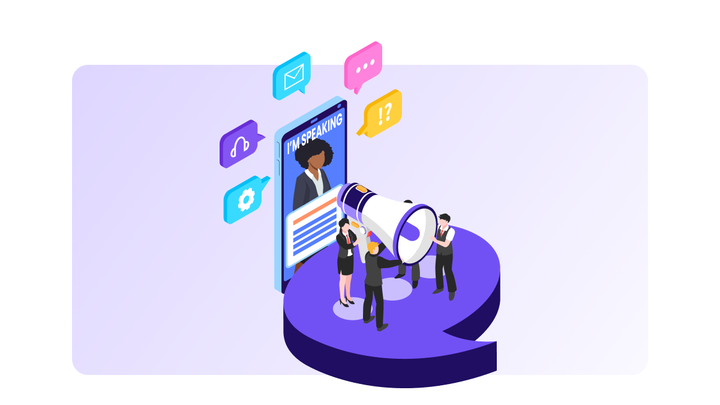
- Speaker campaigns: "I'm speaking" banners and session posters. Speaker-driven sessions can see up to 40% more registrations when speakers share personalized content about their own participation.
- Topic and session campaigns: "I'm talking about X" content that promotes specific agenda moments.
- Avatar campaigns: participants generate branded AI avatars, useful for building buzz before, during, or after the event. At AI Everything MEA Egypt, 3,569 attendees generated 5,013 AI avatars, driving 2,000+ directly attributable registrations. Full details: AI Everything MEA case study.
- Photo campaigns: speakers, attendees, and exhibitors each receive their own personalized event photos to share, delivered by AI face recognition (99.9% accuracy) via WhatsApp and email within minutes of capture. At the IFEAT Annual Conference, 4,000+ photos were auto-matched and delivered at a 92.3% delivery rate, generating 2,939 social shares. At the Middle East Event Show 2025, 6,903 branded photos were downloaded and shared by 2,309 unique advocates, with sponsor branding embedded on every image. Full details: Middle East Event Show case study.
- Throwback campaigns: each person's photos from the previous edition become personalized promotion for the next one, turning your event archive into next year's registration engine.
What to look for in this category: automatic asset generation for every participant group, friction removal (asset, caption, and share button in one flow), per-person referral attribution, and coverage of the full lifecycle from pre-event buzz to post-event content.
The scale case: at GITEX Global 2025, an event with 200,000+ attendance, Premagic activated 32,000+ advocates who published 22,726 total advocacy posts, reaching a potential audience of 5.97M+ at an average of 3.7 referrals per advocate, saving $160k+ in ad spend. Full details: GITEX Global 2025 case study.
The supporting categories: what to look for
2. Registration and landing page builders
For enterprise events with complex, tiered registration logic and deep CRM integration, prioritize depth of configuration even if it means longer setup. For fast-setup ticketed or community events, prioritize speed and simplicity. Whatever the size, look for a platform that connects the registration confirmation directly to a sharing or advocacy flow.
The moment someone registers is the highest-motivation moment they will have before the event. A registration page that immediately invites the new attendee to share their attendance, generate a personalized poster, or refer a colleague captures value that would otherwise disappear within the hour.
Weigh these criteria: registration logic such as tiered pricing, custom forms, and approval workflows for B2B audiences; native integrations with your CRM and advocacy layer rather than manual exports; an advocacy handoff that can trigger a share prompt at the moment of confirmation; and source-level reporting on where registrations come from.
3. Email and CRM automation
For teams that want advocacy and referral tracking connected to their CRM, prioritize a platform with strong native automation and attribution. For automation-heavy nurture sequences, prioritize behavioral triggers. For straightforward broadcast email to smaller lists, prioritize simplicity and quick setup.
Email still delivers in 2026. Segmented sequences built around urgency consistently outperform generic sends, and for events the payback comes from timing and segmentation rather than volume. Connecting your advocacy campaigns to CRM-triggered sequences also means share prompts land at high-intent moments (right after registration, right after check-in, right after photos arrive) instead of in a random blast.
Look for segmentation depth (audiences by behavior, registration status, and persona), automation triggered by registration, check-in, and post-event activity, a CRM connection so advocacy and attribution data live alongside contacts, and native support for event-specific journeys.
4. Event management platforms
For enterprise B2B conferences, prioritize CRM integration and depth of analytics. For events where the on-site experience is the priority, prioritize the mobile app and attendee experience. For mid-market teams, prioritize flexibility and pricing without enterprise overhead.
This category is for events above roughly 500 attendees that need to manage sessions, speakers, and analytics in a coordinated way. The most important criterion is not feature count, it is whether the platform integrates natively with your CRM and advocacy layer, so advocacy campaigns and photo delivery do not require a separate manual workflow.
5. Analytics and attribution
Look for tools that break registrations down by source, including paid, organic, and advocate referral. Basic event platforms report registration counts and email open rates. That level of reporting is insufficient for any team defending a marketing budget.
The capability to prioritize is registration-level attribution. Premagic's advocacy tracking assigns unique referral links to individual advocates, so every peer-driven sign-up can be traced back to the person who drove it. Share counts, referral clicks, and resulting registrations are all visible per advocate. The free Premagic EMV Calculator converts LinkedIn post data into estimated earned media value.
When comparing analytics options, ask whether the tool can attribute individual registrations to individual advocates, separate paid, organic, and referral sources cleanly, quantify social reach and earned media rather than clicks alone, and feed results back into your CRM for closed-loop reporting.
6. Virtual and hybrid event platforms
For virtual-first events with exhibition hall requirements, prioritize a strong online exhibition experience. For hybrid formats where production quality matters, prioritize streaming and production capabilities. For community-focused virtual events, prioritize engagement features over scale.
Key criteria to weigh: format fit (virtual-first, hybrid, or community), production and streaming quality for hybrid, engagement tools at the depth your audience needs, and integration with your advocacy and analytics layer so online audiences are captured too.
How to build your stack without overcomplicating it
The most common mistake teams make is buying too many tools that do not connect to each other. Match the stack to the size of the event:
| Event size | Recommended stack |
|---|---|
| Under 1,000 attendees | An advocacy platform, a registration platform, and email automation. |
| 1,000 to 10,000 attendees | Add a dedicated event management platform, verified to integrate with your CRM and advocacy layer before purchase. |
| Above 10,000 attendees | A management platform as the foundation, a CRM as the system of record, and Premagic for advocacy campaigns and photo delivery, with native integrations prioritized over manual data exports. |
The one capability missing from almost every event stack is a systematic approach to turning registered attendees into active advocates before the event opens. That peer-driven registration lift (at GITEX Global 2025 it meant 3.7 referrals per advocate across 32,000+ advocates) sits untapped in most organizers' contact lists.
Frequently asked questions
What is the best event marketing software in 2026?
There is no single best tool, because event marketing requires at least three categories of software working together: advocacy, registration, and email automation. The right choice within each category depends on event size, budget, and whether your audience skews B2B or consumer.
Which category delivers the best ROI?
Attendee advocacy consistently delivers the highest return per dollar spent, because the channel is organic. Premagic's poster campaigns report a 30% conversion rate from share to registration, and advocacy at GITEX Global 2025 saved an estimated $160k+ in ad spend.
What is attendee advocacy in event marketing?
Attendee advocacy is the practice of turning registered attendees, speakers, and exhibitors into active promoters of your event through their own professional networks. Advocacy platforms run campaigns ("I'm attending" posters, speaker banners, AI avatars, personalized photos, throwbacks from the last edition) with embedded referral tracking links for each participant.
Are photo campaigns worth running?
For events with professional attendees active on LinkedIn, yes. Personalized photos are the most shared type of post-event content. At the IFEAT Annual Conference, 4,000+ photos were auto-matched and delivered at a 92.3% delivery rate, generating 2,939 social shares with sponsor branding embedded on every image.
How much should I spend on event marketing software?
Budgets vary widely by event size and format, so anchor on measurable return rather than a fixed percentage. The categories with the clearest attributable return are attendee advocacy (per-advocate referral tracking) and email automation, so weight spend there first and expand once attribution proves out.
How do I measure the ROI of attendee advocacy?
Effective advocacy platforms assign unique referral links to each participant, enabling direct attribution of registrations to individual advocates. Premagic's dashboard shows share counts, referral clicks, and resulting registrations per advocate.
Premagic figures are drawn from published case studies and platform benchmarks across 2,000+ events. Case study metrics are sourced from individual client dashboards and linked to the relevant case study pages for verification.
Final takeaway
The best event marketing stack is not the one with the most software. It is the one that removes friction for attendees at every stage: between registering and sharing, between attending and posting, and between the event ending and the content reaching the right audience. Start with advocacy, and make every other tool feed it.
Premagic powers advocacy campaigns, AI photo delivery, and AI avatar campaigns for 2,000+ events globally. Learn more at premagic.com or explore the case study library at premagic.com/case-study.