How to repurpose conference content: 7 ways to get year-round ROI
Stop letting your conference content die after the closing keynote. Here are 7 proven ways to repurpose sessions, photos, and speaker insights into year-round marketing.
You spend months planning a conference. You lock in speakers, nail the run-of-show, pack the room. And then the event ends, the attendees scatter, and all that incredible content, the keynote insights, the panel debates, the candid Q&A moments, quietly fades into a shared Google Drive nobody opens.
That's a real waste. A two-day conference can fuel your content calendar for three to six months if you know where to look. According to a 2026 Rozie Synopsis analysis, up to 63% of event content views happen after the live date. Your audience is still hungry for that content. They just need you to serve it in the right format.
Here's how to do it.
Start with what you actually captured
Before you can repurpose anything, take stock. What's in your archive? Session recordings, speaker slide decks, attendee photos, live Q&A transcripts, sponsor presentations, social posts, and even hallway conversations that made it onto someone's phone camera.
Not all of it is worth repurposing. As BizBash puts it: "Repurpose the gold, not the coal." Pull out the three to five moments that generated the most audience energy, a quote that got applause, a data point that sparked debate, a speaker demo that ran over its time slot because no one wanted it to stop. Those are your atoms.
Turn one session into five content pieces
This is the move that changes how you think about conferences. A single 45-minute session can legitimately produce:
- A 1,000-word blog post built from the transcript
- Three to five short-form video clips (30–90 seconds each) for LinkedIn and Instagram Reels
- A LinkedIn carousel with the session's top five takeaways
- One email newsletter segment or a multi-part drip sequence
- An infographic pulling out the most shareable statistic
Use AI transcription tools like Descript or Otter.ai to get a clean text version of every session fast. That transcript is the raw material for almost everything else on the list. A RingCentral analysis framed it well: the goal is moving from a "one-and-done" event to a year-round content engine.
Activate your speakers before and after
Here's something most organizers miss: your speakers are content distributors, not just content creators. The moment they're confirmed, they have audiences of their own who trust them.
Speaker-shared content performs differently than brand-shared content. It lands in professional networks with built-in credibility. According to Premagic's own advocacy data, speaker-shared posters drive up to 40% more session registrations, because a recommendation from a trusted voice converts at a rate a paid ad simply can't match.
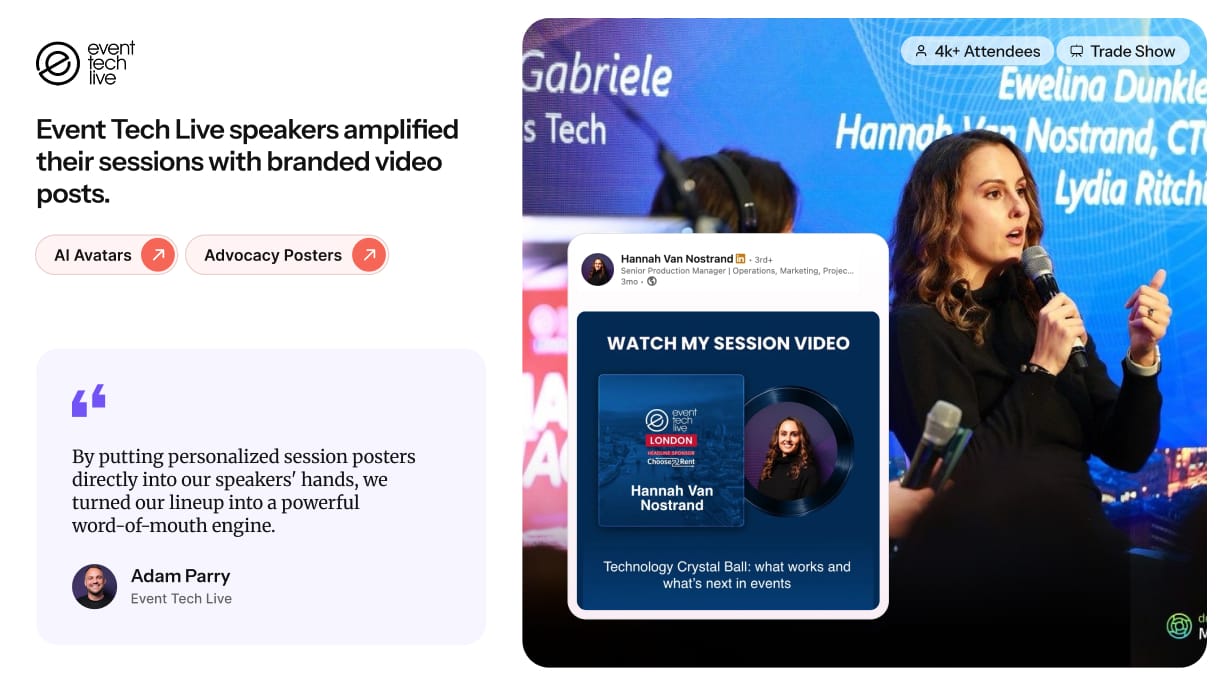
Post-event, give every speaker a clip package: their best 90-second moment, a branded quote card, and a few suggested captions. Make it one click to share. Most speakers want to amplify their talk, they just don't have the time or assets to do it themselves. Removing that friction is what turns a passive speaker into an active promoter. The event advocacy playbook breaks down exactly how to structure these campaigns for maximum reach.
Don't sleep on event photos
Photos are the most underused post-event content type. Everyone takes them. Almost no one distributes them well.
The problem is usually timing and logistics: photos come back days or weeks later, long after the emotional peak of the event. By then, nobody's posting.
Solve the timing problem and you solve the distribution problem. When attendees get their photos the same day, they share them immediately, flooding LinkedIn and Instagram with real, human moments from your event. That organic reach does more brand work than any recap blog post.
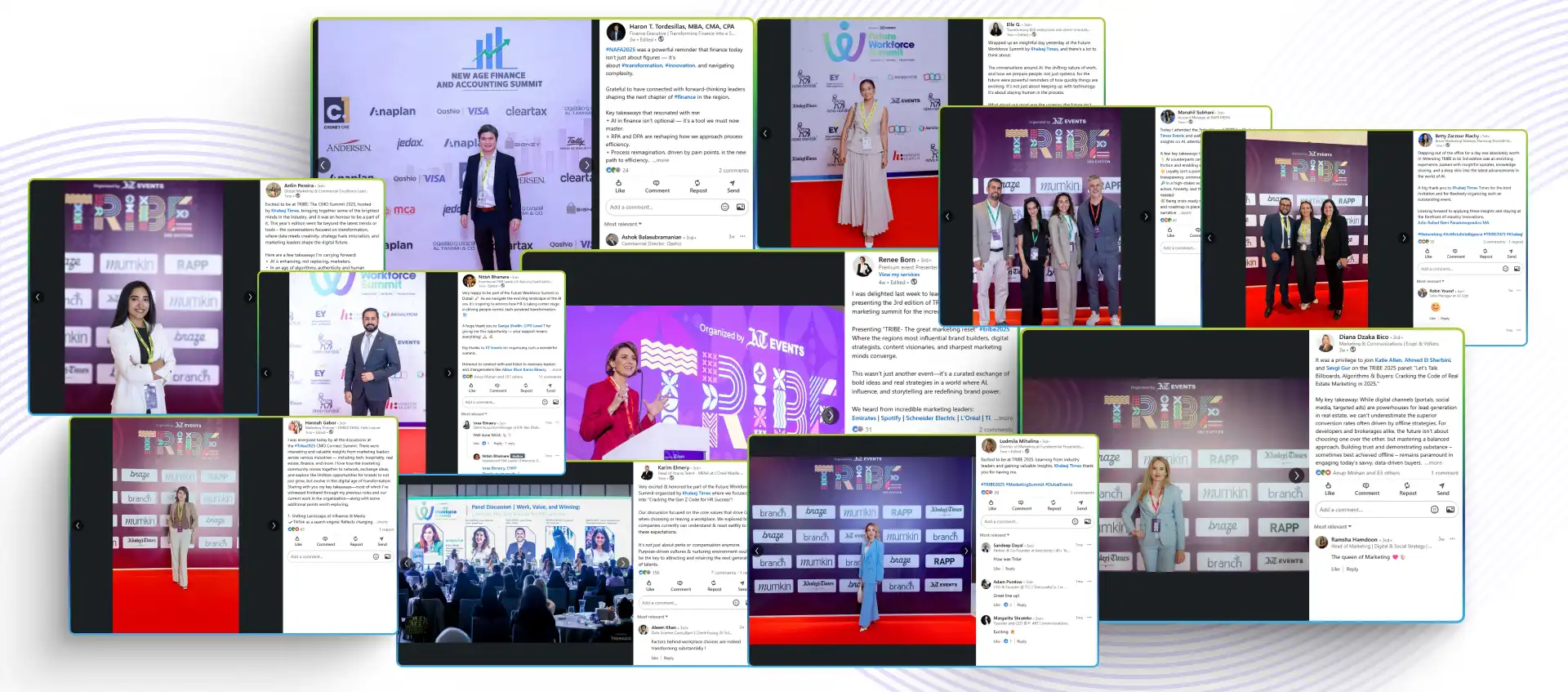
Platforms like Premagic's AI photo distribution use face recognition to deliver each attendee their personal gallery via WhatsApp or email within minutes of photos being taken (99.6% accuracy across 2,000+ events). NASSCOM used this approach and saw attendees share over a thousand event photos across social media, expanding their digital footprint well beyond the event walls. The GITEX GLOBAL 2025 case study shows how attendee-led content contributed to 200K+ attendance at one of the world's largest tech conferences.
Build a pre-event content loop for next year
This one's counterintuitive: the best time to start repurposing conference content is before the event even happens.
Last year's session recordings become teasers for this year's lineup. A quote from a past speaker can anchor your early-bird campaign. A testimonial video from an attendee makes a more compelling registration page than any feature list. The Attendee Content Impact Report 2025 found that attendee-generated content consistently outperforms brand-produced content in both reach and conversion.
When you repurpose with a system, content from one conference feeds the promotion of the next. You're not starting from scratch every cycle. You're compounding.
Make attendees part of the content strategy
Attendees are walking content opportunities. They're already at your event, already excited, and already connected to an audience you probably can't reach through your own channels.
Personalized "I attended" assets, posters, avatar cards, countdown graphics, give them ready-made content worth sharing. A one-click share to LinkedIn or WhatsApp at the right moment converts at roughly 1 in 3. That's not a campaign you can buy. That's advocacy.
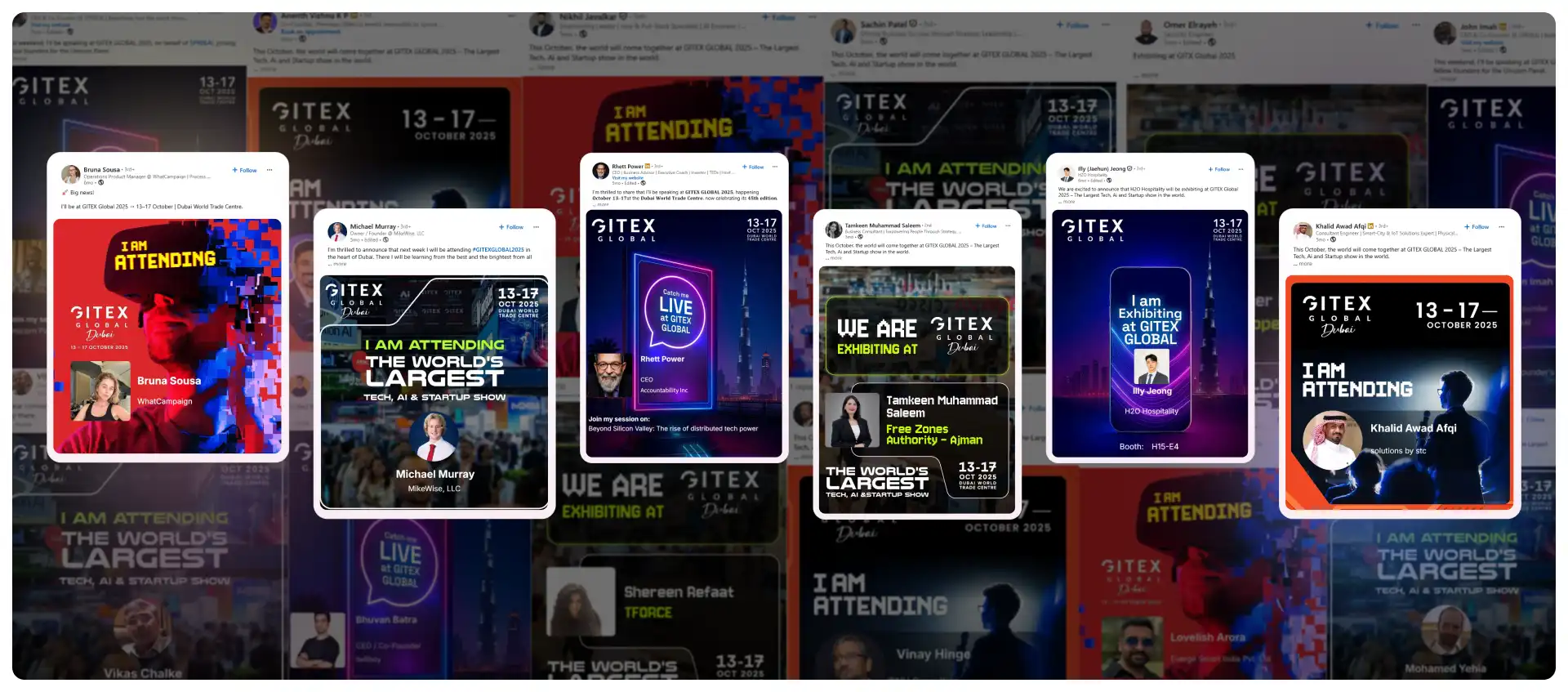
Premagic's personalized event marketing posters auto-generate branded assets for every attendee, speaker, and sponsor. At the Khaleej Times Future Workforce Summit, nearly 80 attendees posted "I'm Attending" posters that drove over 690 referrals. The IDC conference campaign generated 1,074 referral links from 212 participants, producing a 7,245% ROI from advocacy alone.
The conference doesn't end when the last session wraps. For most of your audience, the best content moments are still ahead, they just need the right nudge and the right format to reach them.
Ready to Keep the Momentum Going?
Stop designing for a single weekend and start designing for a year-round community. Engagement doesn’t end at the closing keynote; it’s about turning your event into a continuous engine of shared insights.
Next Steps:
- Get Inspired: Campaigns that turn attendees into your biggest growth channel
- Want to keep your attendees engaged?: Check out 10 Easy Ways to Increase Event Attendee Engagement
- See It In Action: Schedule a quick 15-minute Demo to see how our platform handles these tactics in real-time.
FAQs
How long should I spend repurposing content after a conference?
Most of the highest-value repurposing work — clipping speaker videos, distributing attendee photos, drafting the recap blog — should happen within the first one to two weeks after the event, while the content is still timely and speakers are still willing to share. Slower-burn content, like case studies or quote-led campaigns for next year's early-bird push, can roll out over the following months.
What's the easiest piece of conference content to repurpose first?
Event photos. They require no editing or scripting, attendees want them immediately, and same-day distribution drives the fastest organic sharing of any content type from a conference.
Do speakers actually share content if you give it to them?
Yes, when the friction is removed. Most speakers want to promote their session but don't have time to create assets themselves. Providing a ready-made clip, quote card, and caption makes sharing a one-click action rather than a task.