Consent-First Event Photos: Instant, App-Free Delivery
Attendees expect their event photos in minutes, and regulators expect consent done right. Here's how to deliver both at your next event.
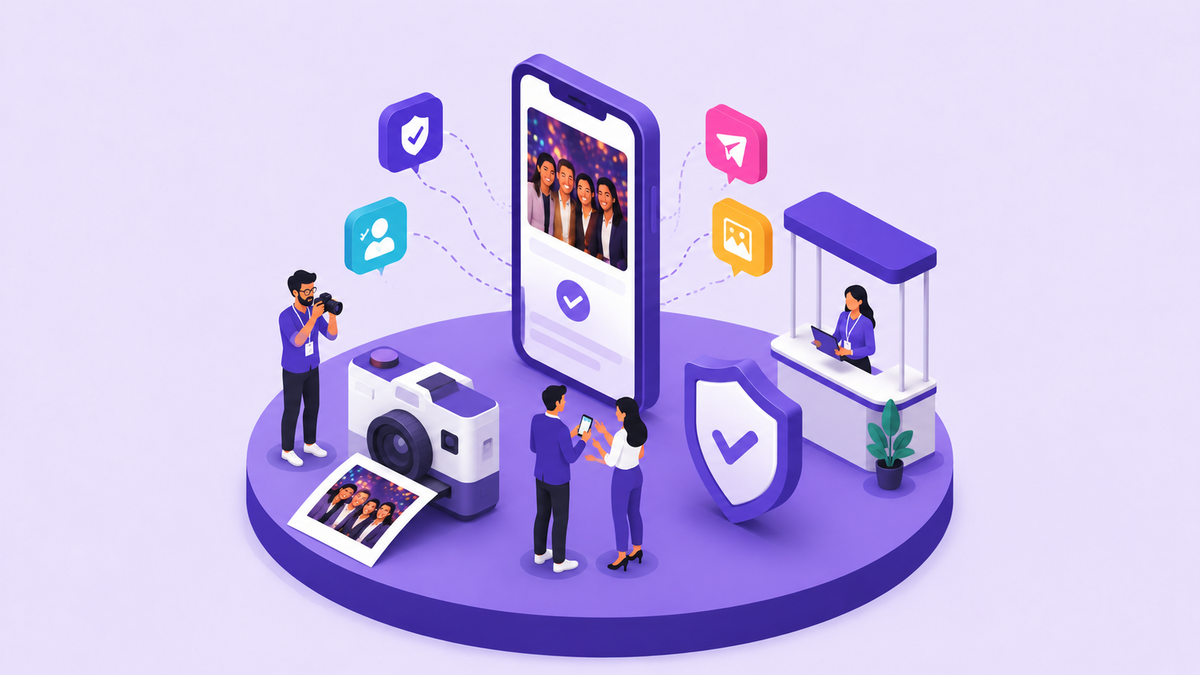
How to Deliver Instant Photo Experiences Without the Privacy Headache
Your attendees have started to expect something very specific from event photography: they take a selfie at check-in, and before they're back in their seat, they have a private gallery on their phone with the photos they appear in.
That speed is quickly becoming part of the event experience. But there's another expectation growing alongside it, and this one comes from more than attendees. Legal teams, procurement teams and enterprise clients increasingly want to know exactly what happens to attendee data when AI and face matching are involved.
That's where consent-first photo delivery comes in. The goal isn't to choose between a great attendee experience and responsible data handling. You should be designing for both from the start.
What does consent-first photo delivery actually mean?
Face-matching technology can involve the processing of biometric information, which means privacy and data protection need to be considered carefully when you're planning an event photo experience. Consent-first isn't simply a privacy notice added at the end of the process. It should shape how the experience works from the beginning.
There are a few principles worth keeping in mind.
Opt-in, rather than opt-out. The attendee should actively choose to participate in face matching, usually by submitting a selfie. They shouldn't be enrolled automatically.
Private by default. Once photos are matched, the attendee should receive their own photos rather than being given access to someone else's gallery. A face match should help someone find their photos, not expose other attendees.
Keep personal data for as little time as necessary. If a selfie is collected specifically to match event photos, your process should make clear how long that selfie is retained and when it is deleted. This is particularly important for enterprise clients with their own data retention requirements.
Give people another way to get their photos. Not everyone will want to use face matching, and some organizations may prefer a completely PII-free experience. Providing a QR-based gallery option gives those attendees another way to access their photos without requiring them to provide personal information.
HCL Tech is a good example of why this matters. HCL wanted event photo sharing without attendee data leaving its ecosystem. Premagic's guest gallery allowed attendees to scan their faces using a selfie without providing names, email addresses or phone numbers, and the selfies are deleted soon after use. HCL has since used the solution across more than 10 events in India, Japan, Singapore and Europe.
Be able to explain your compliance approach. If your client asks how the system handles personal data, your team should have a straightforward answer. Depending on the markets and attendees involved, that may include requirements under regulations such as GDPR or CCPA, as well as a data processing agreement and your vendor's own privacy documentation.
The important thing is not to treat privacy as something that gets added after the technology has already been chosen. It should be part of the vendor evaluation and event planning process.
The attendee experience still needs to be fast
Once the privacy side is clear, there's another question: how quickly can someone actually get their photos?
Because a perfectly compliant photo experience that takes two days to deliver isn't going to feel particularly magical.
The strongest workflows remove as much friction as possible.
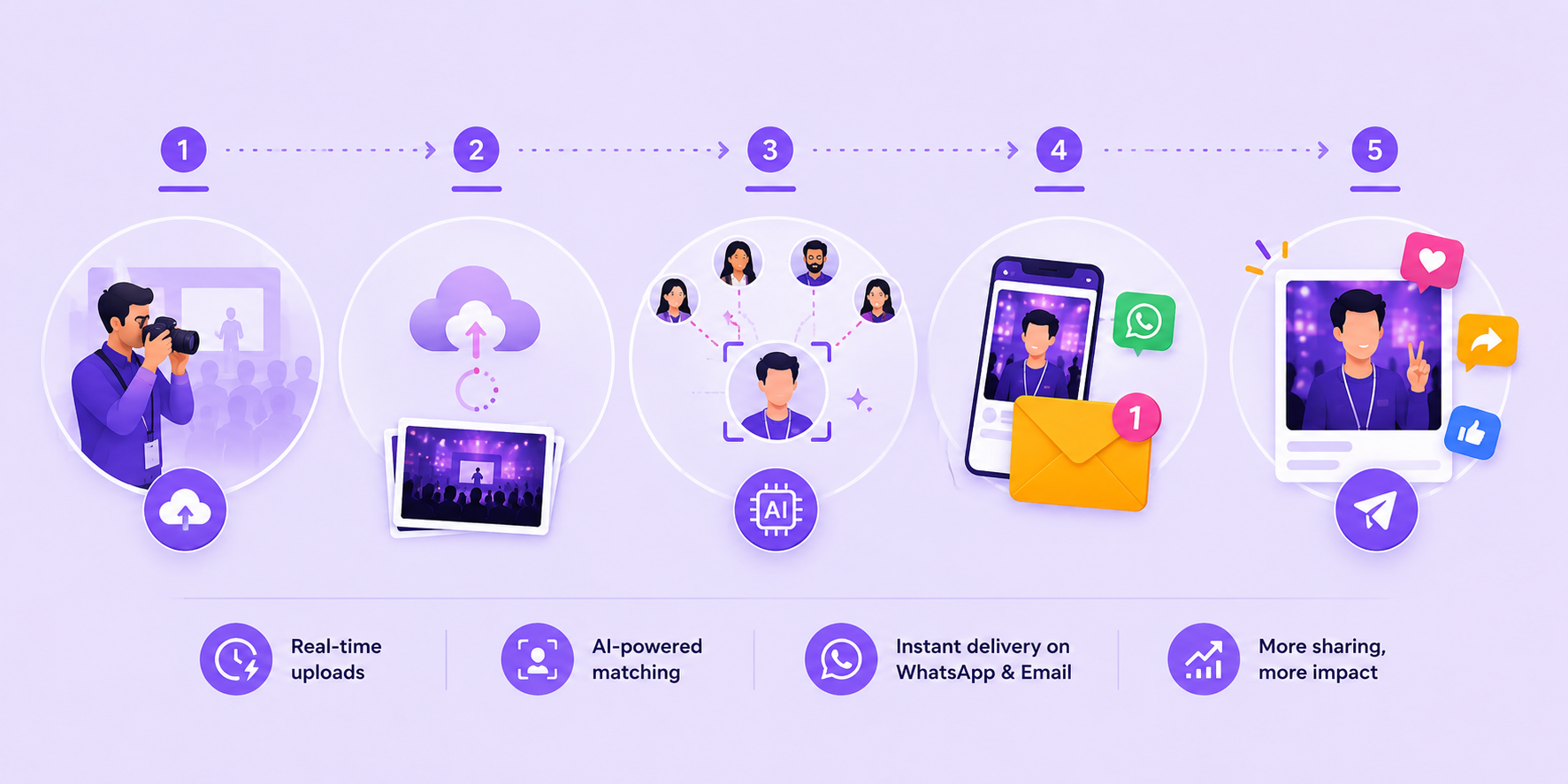
Photographers upload continuously. Instead of waiting until the end of the day, photographers can upload photos as they shoot. That means a photo from the morning keynote can potentially reach the attendee while they're still at the event.
AI does the matching. Rather than asking a team to manually tag thousands of images, face-matching technology can identify people in photos and match them to opted-in attendees.
Deliver photos where people already spend their time. WhatsApp and email are much more useful than asking someone to remember to visit a gallery later. The faster the photo reaches the attendee, the more relevant it feels.
Make sharing easy. Once someone has received a great photo of themselves, the next step should be simple. Branded photos, pre-filled captions and one-tap sharing can turn a private photo delivery experience into organic event visibility.
We've covered the mechanics of this in more detail in our guide to event photo distribution and social sharing. The basic idea is simple: the photo has more marketing value when it reaches the person while they're still thinking about the event.
Privacy and speed aren't competing priorities
It's easy to think of privacy and attendee experience as two separate projects. In reality, they can reinforce each other.
When people understand what is happening with their data, they're more likely to feel comfortable using the experience. And when the experience is simple, useful and transparent, you don't have to convince people with a wall of legal language.
Think about the difference between:
“By proceeding, you acknowledge and agree to the processing of biometric data in accordance with our privacy policy.”
and:
“Take a selfie and we'll privately send you the event photos you're in. Your selfie is used for matching and then deleted.”
Your legal team will still need the full documentation. But your attendee communication doesn't need to sound like a contract.
That clarity matters because the photo itself is the incentive. You're giving attendees something they actually want: a collection of professional photos of themselves, delivered while the event is still happening.
When Richmond Italia used Premagic at one of their events, more than 90% of attendees registered to get their photos delivered. The point isn't that every event will achieve the same participation rate. It's that a useful attendee experience can drive strong adoption when people understand the value.
And once those photos are in attendees' hands, you can give them an easy reason to share. Our guide on getting attendees to post about your event goes deeper into how to design those sharing triggers.
A practical checklist for your event team
If you're planning an AI-powered photo experience, it's worth getting the operational and privacy pieces aligned before event day.
- Offer clear opt-in for face matching and explain what the attendee is agreeing to.
- Provide a no-PII alternative for attendees who don't want to use face matching.
- Confirm your vendor's retention policy for selfies and other personal data.
- Have your legal or procurement team review the relevant privacy documentation before the event.
- Brief photographers to upload continuously, rather than waiting until the end of the day.
- Set a delivery target, ideally measured in minutes rather than hours or days.
- Keep attendee communication simple and explain the experience in plain language.
- Make sharing easy once photos arrive, with branded galleries and simple social sharing options.
- Make sure the experience is private, so attendees only receive the photos they're entitled to access.
The goal is simple: make the experience feel effortless
The best event technology is often the technology attendees barely notice.
They take a selfie. They get their photos. They share the ones they love. The organizer gets a better attendee experience and more organic content. And the privacy team can see that the process was designed with consent and data handling in mind from the beginning.
That's what consent-first photo delivery should look like. Not a slower version of instant photo sharing, and not a compliance exercise disguised as an attendee experience. Just a fast, useful experience that people understand and trust.
And the value doesn't necessarily stop when the event ends. Your event photo gallery can continue to support follow-up, content and engagement after the show.
Want to see how consent-first, AI-powered photo delivery can work at your next event? Talk to the Premagic team.