How fast photo distribution drives event social sharing
Your event photos sit in a drive for two weeks while the buzz dies. Here's how fast, personalized photo distribution turns them into organic reach.
Here's a pattern I've seen at dozens of conferences. The photographer shoots 20,000 great photos. Three weeks later, a Google Drive link goes out in a wrap-up email. Open rate: modest. Shares on social: close to zero.
The photos were good. The timing killed them.
Event photo distribution isn't a logistics task. It's a marketing channel. And the difference between a photo that gets shared and a photo that gets buried comes down to three things: speed, personalization, and how easy you make the share.
Why the two-week photo dump gets zero shares
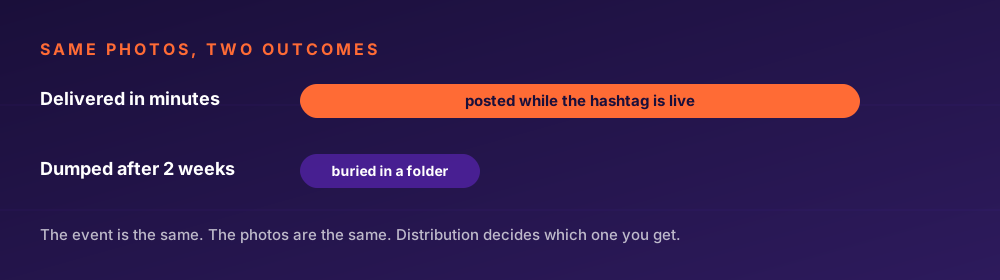
Think about what makes someone post an event photo. They're still excited. The event hashtag is still moving. Their network just saw them post "heading to the summit" three days ago, so a great photo of them on the show floor completes the story.
Two weeks later? The moment is gone. Posting old event photos feels like showing up to a party that ended. So people don't.
There's a second problem: the dump itself. Nobody scrolls through 20,000 photos in a shared folder looking for the four they appear in. The effort is too high, so the photos die in the folder.
Both problems have the same fix. Get each person their own photos, while the event is still happening.
What fast, personalized distribution looks like
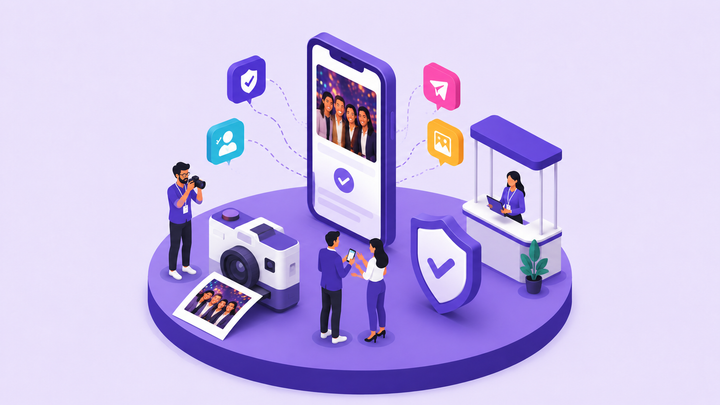
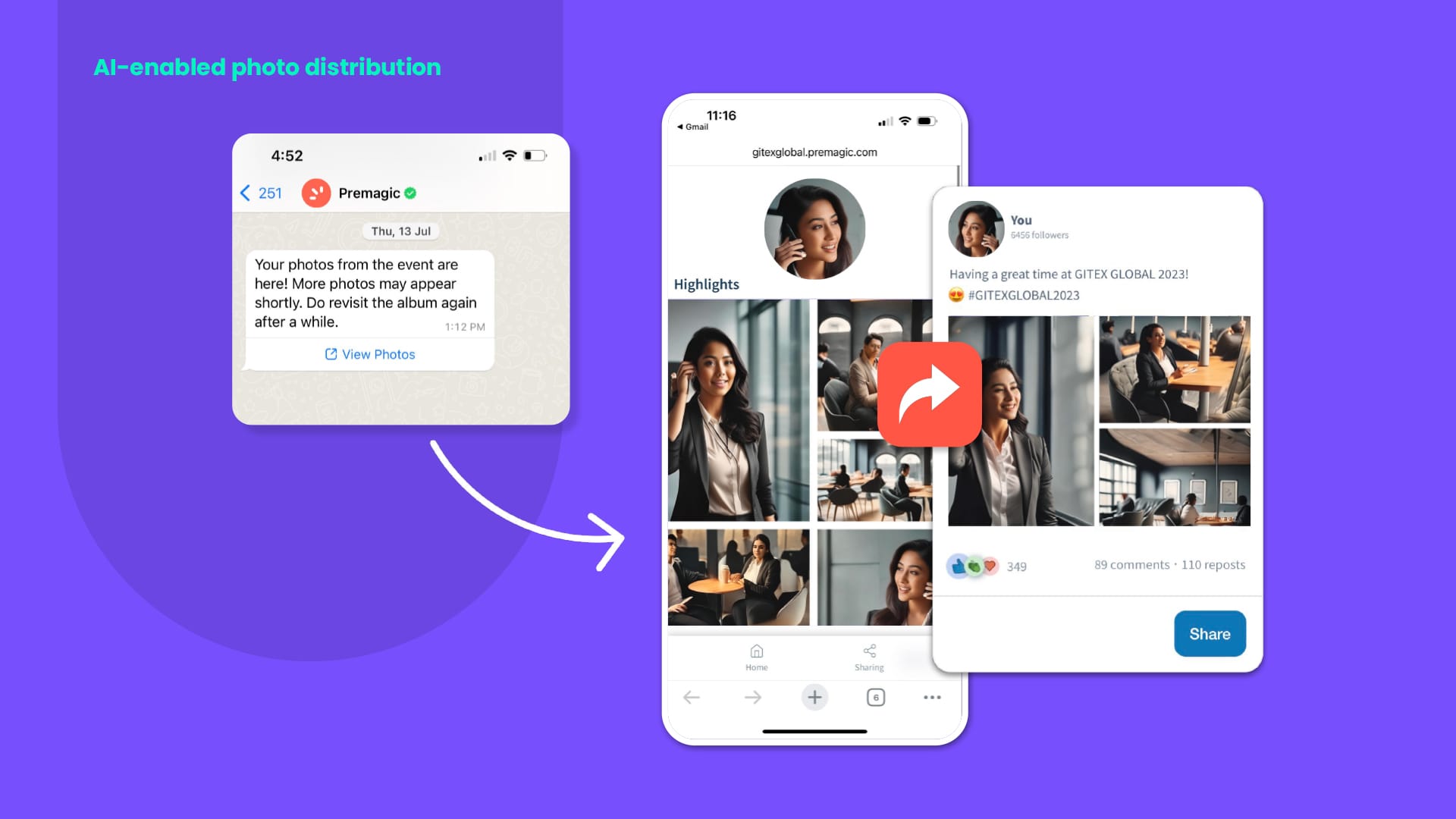
The modern approach uses AI face recognition. Photographers upload as they shoot. The system detects every face, matches it to registered attendees, and sends each person a personal gallery, delivered over WhatsApp or email within minutes.
No manual tagging. No searching. The attendee gets a message that says, in effect, "here are your photos from the last hour."
And this is where sharing takes off. A personal gallery with pre-filled captions and hashtags makes posting a one-tap decision. It's the single easiest win in getting attendees to post about your event. The attendee looks good, the event gets the branded reach, and it all happens while the hashtag is still live.
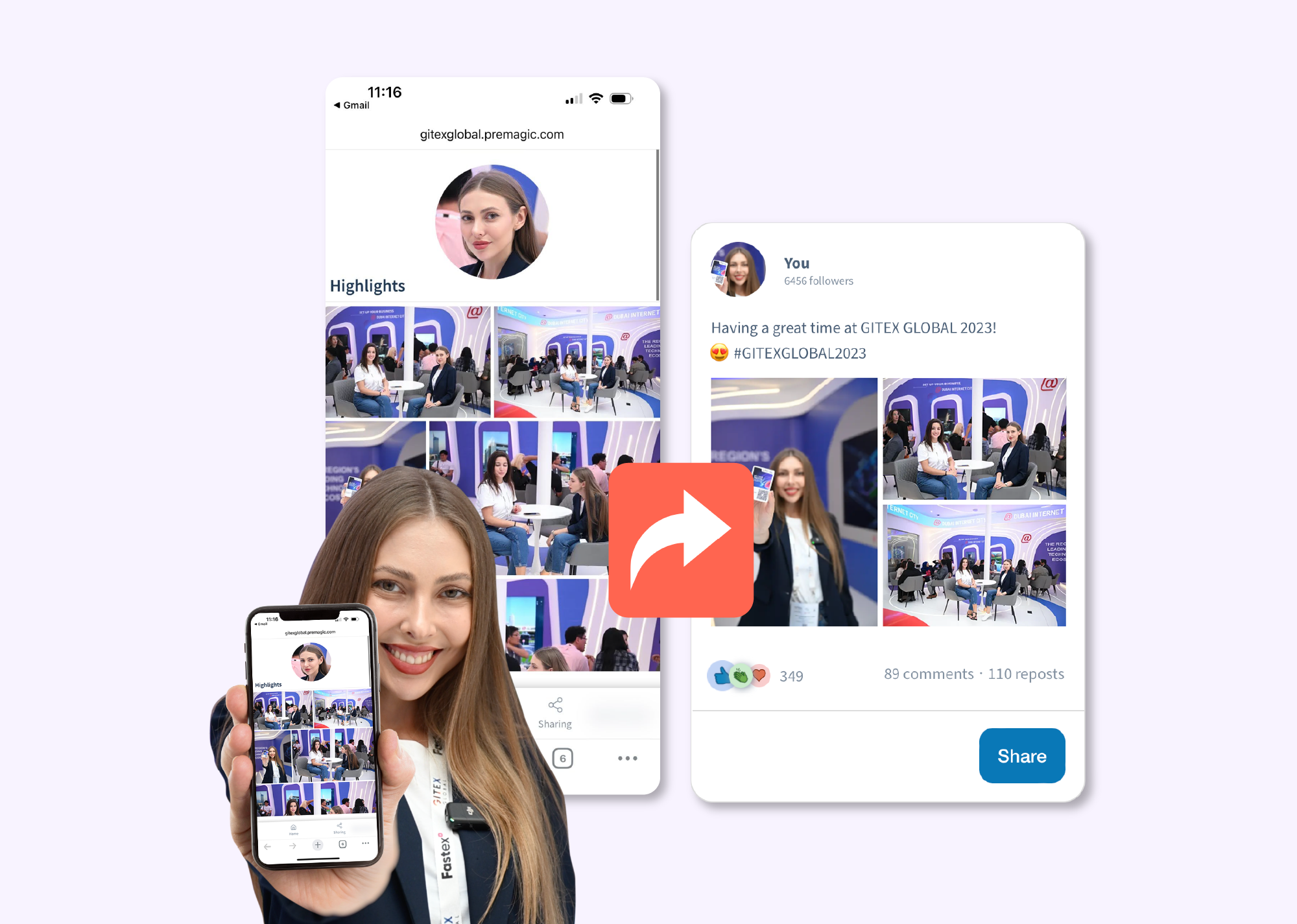
At GITEX Global 2025, 20,000+ photos were distributed instantly on-site as part of a wider advocacy program that activated 32,000+ attendees. The year before, GITEX 2024's photo delivery alone produced 16K+ photos, 7K+ downloads and shares, and 500+ organic posts.
Those posts aren't vanity. Each one is a trusted, personal endorsement of the event, seen by a network your ads can't reach for free.
Photos are the fuel. Advocacy is the engine.
Here's the reframe that matters: distribution on its own is a nice attendee perk. Distribution inside an event advocacy campaign is a growth channel.
The difference is the referral link. When each shared photo or gallery carries a unique link back to your registration page, every post becomes trackable acquisition. You see who shared, what reach it created, and which registrations came from it.
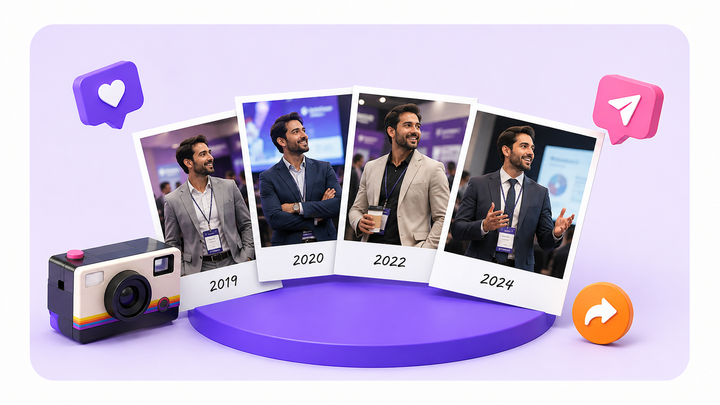
This also unlocks my favorite underused play: the throwback campaign. Next year, when registration opens, you send every past attendee their photos from the previous edition with a "join us again" link. Their memories become your launch campaign. Tools like Premagic build the face-matched photo archive that makes this possible without any manual work.
The demand side: attendees want to participate, not just attend
If this feels like a nice-to-have, the industry data says otherwise. In the latest UFI Global Exhibition Barometer, 95% of exhibition companies said their event formats need improvement, and the single most-cited enhancement (22%) was enabling visitors to participate and engage.
Photo distribution is participation infrastructure. It turns attendees from an audience into co-creators of the event's content. Brand visibility follows, because every shared photo is branded, watermarked, and carries your event into feeds you don't own.
One caveat worth taking seriously: privacy. Face matching should run with attendee consent, deliver photos privately to the matched person only, and offer a no-PII option for sensitive audiences. Ask any vendor how they handle this before you sign.
A simple playbook for your next event
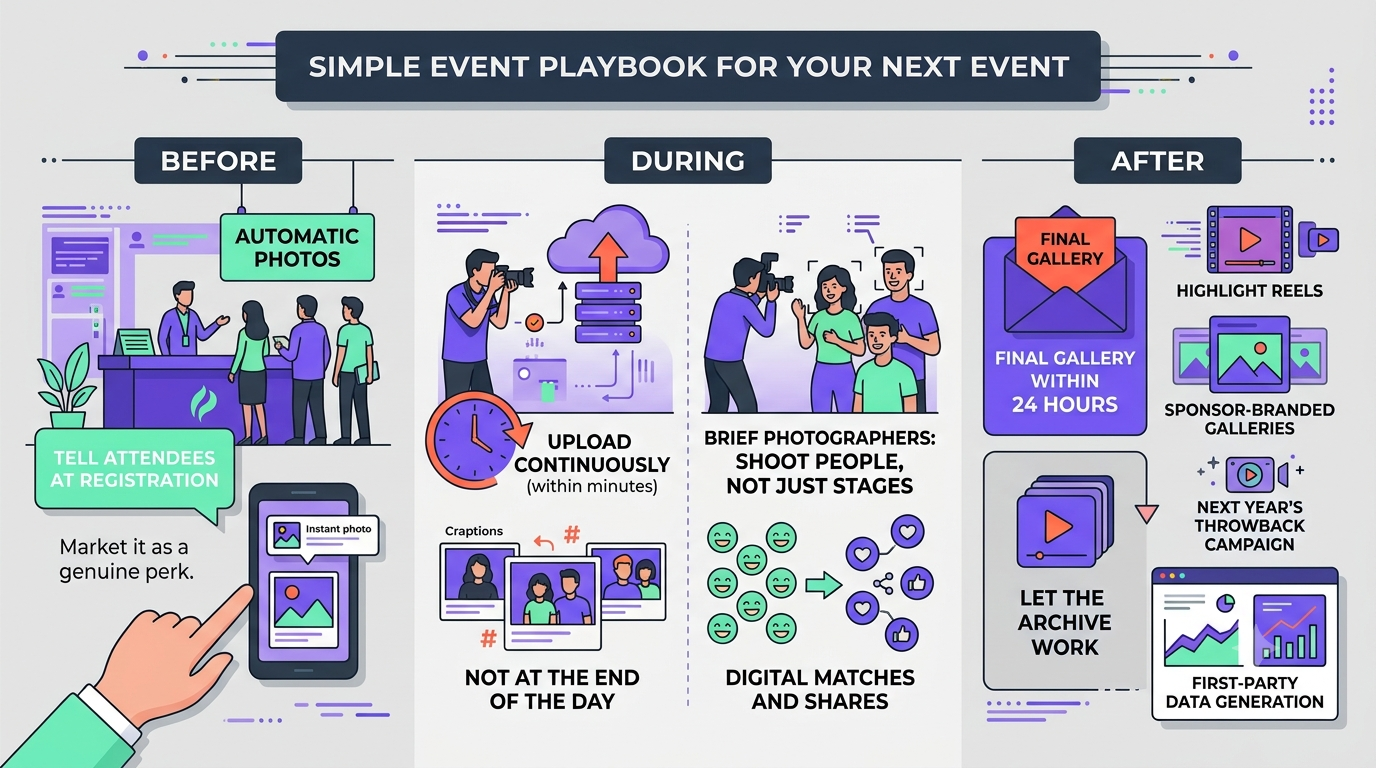
- Before: tell attendees at registration that they'll get their photos automatically. It's a genuine perk; market it.
- During: have photographers upload continuously, not at the end of the day. Deliveries should go out within minutes, with captions and hashtags pre-filled.
- During: brief your photographers to shoot people, not just stages. Faces drive matches; matches drive shares.
- After: send a final gallery within 24 hours, then let the archive work: highlight reels, sponsor-branded galleries, next year's throwback campaign, and the first-party data your photo gallery generates.
The one takeaway: your event photos are already paid for. Whether they become marketing or storage depends entirely on how fast and how personally you distribute them.
Want to see how AI photo distribution can power sharing at your next event? Get in touch today.