What is Event Advocacy Marketing? A Guide for Conferences
Event advocacy marketing turns attendees, speakers, and sponsors into your promotion channel. Here's how it works, with real conference numbers.
Every conference already has a marketing team it isn't using: the people attending it.
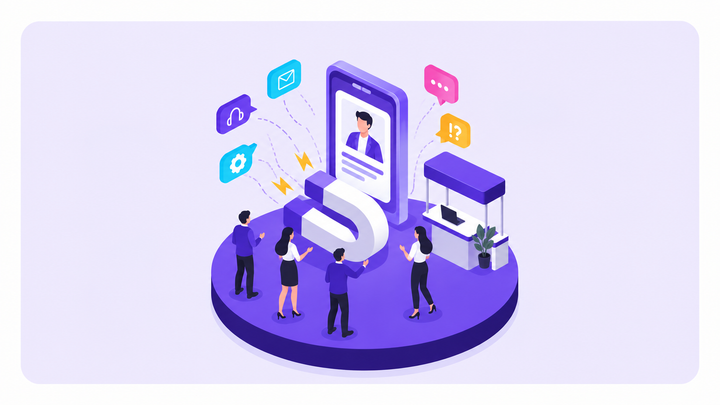
Event advocacy marketing is the practice of systematically turning your event's participants (attendees, speakers, exhibitors, sponsors) into active promoters who share the event with their own networks, with every share tracked back to registrations.
The key word is systematically. Hoping people post about your event is not advocacy marketing. Giving every participant a personalized, one-tap-shareable asset with their own referral link, and measuring what each share drives, is.
How event advocacy actually works
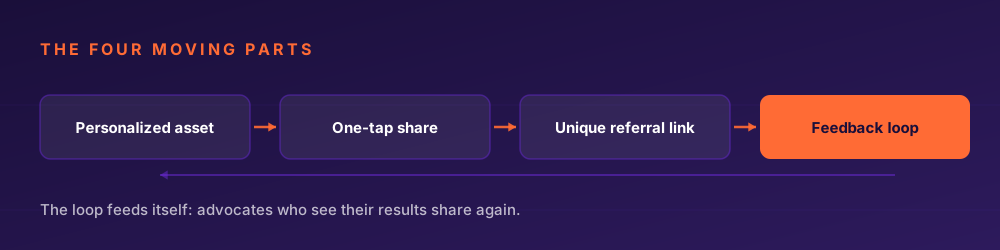
Strip away the tooling and the mechanism has four moving parts:
1. Personalized assets. Each participant gets something worth sharing that's about them, not just your event. A poster with their name and photo. A speaker card with their session. A branded photo of them on the show floor. People share content that makes them look good; your branding rides along. That's the core rule of getting attendees to post about your event.
2. Frictionless sharing. Pre-written captions, event hashtags, one-click posting. The gap between "would share" and "did share" is almost always effort.
3. Unique referral links. Every asset carries a link tied to that specific person. When someone in their network clicks and registers, the registration is attributed to the advocate who drove it. This is how you track word-of-mouth registrations instead of guessing at them.
4. A feedback loop. Leaderboards and dashboards show advocates (and you) what their shares produced. Recognition fuels more sharing. Data tells you which groups to invest in.
That last part is what separates advocacy from generic "social media marketing." It's an acquisition channel with attribution, not a branding exercise.
The six campaign types
Advocacy campaigns run across the whole event lifecycle: before (registration push), during (live buzz), and after (content that sells next year). The main formats:
- "I'm attending" campaigns. Personalized posters attendees share when they register. The workhorse format for driving registrations beyond paid ads.
- "I'm speaking" campaigns. Speaker banners and session cards. Speakers have the most authority and the biggest relevant networks; speaker campaigns can amplify session registrations by up to 40%. Here's how to get speakers to promote your conference on LinkedIn.
- Topic and session campaigns. "I'm talking about X" assets built around content themes rather than plain attendance, useful for multi-track conferences.
- Avatar campaigns. Branded AI avatars as the shareable asset. At AI Everything MEA Egypt, an avatar challenge generated 5,000+ avatars, 1,800+ LinkedIn posts in one week, and drove 2,000+ registrations.
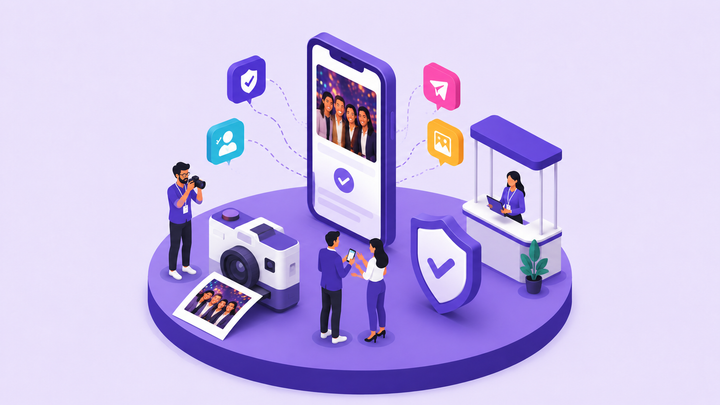
- Photo campaigns. Personalized event photos delivered to each person within minutes, branded and captioned for one-tap sharing.
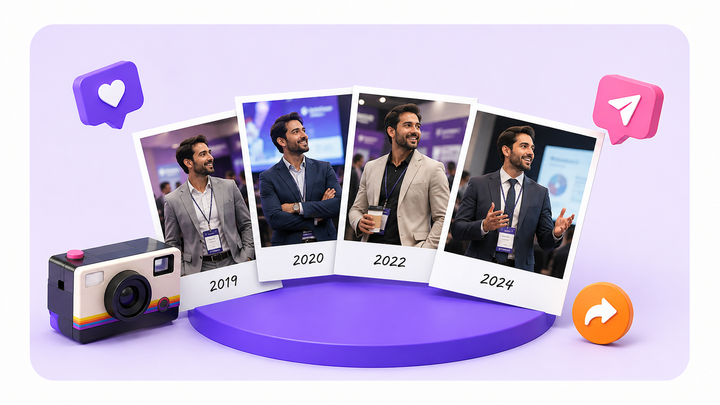
- Throwback campaigns. Last edition's photos, re-delivered when registration opens for the next one. Your archive becomes launch marketing.
You don't run all six at once. Most events start with "I'm attending" plus one more that fits their audience.
What results look like in practice
Numbers from published conference case studies, not projections:
- GITEX Global 2025 (200,000+ attendees): 32,000+ activated advocates, 3.7 referrals per advocate, 22,726 posts, 5.97M+ potential reach, $160,000+ in ad spend saved.
- African Tech Summit (1,000+ attendees): 218 attendees became active promoters, a 50% advocacy rate against a ~5% industry standard.
- Khaleej Times Future Workforce Summit: ~80 posting attendees drove 690+ referrals.
The pattern across sizes: a minority of participants activate, but each activated advocate reaches an audience your ads would pay to touch, and converts it better. Peer shares convert to registrations at roughly 1 in 3.
Why does this work so reliably? Because it matches where the industry is heading. In the latest UFI Global Exhibition Barometer, 95% of exhibition companies said event formats need improvement, and the top requested enhancement was participatory engagement. Advocacy is participation with a registration link attached.
What an event advocacy platform does (and how to evaluate one)
You can run a small advocacy push manually. Past a hundred participants, you need software. An event advocacy platform handles:
- Asset generation at scale: personalized posters, cards, avatars, and photo galleries created automatically from registration data.
- Distribution: delivery to each participant over email or WhatsApp, with sharing built in.
- Attribution: unique referral links per person, tracked through to completed registrations.
- Reporting: live leaderboards, reach and referral dashboards, ad-spend-equivalent metrics you can put in front of leadership. The same instrumentation produces the proof sponsors need that your event drove results.
When evaluating, ask three questions.
Does it cover the full lifecycle (pre, during, post) or just one slice?
Does it connect to your registration platform so assets generate automatically?
And can it prove, person by person, which registrations the campaign drove?
That last one is the difference between a tool and a channel. Our event marketing tools buyer's guide covers the wider stack.
This is the category Premagic operates in, powering advocacy for events from 100-person summits to GITEX. For a deeper operational guide, the Event Advocacy Playbook walks through the full four-phase rollout.
The takeaway
Event advocacy marketing is not a trend riding on "authenticity." It's an acquisition channel built on a simple asymmetry: your participants' networks are full of your ideal registrants, and a personal post reaches them with more trust and less cost than any ad.
Give participants something personal worth sharing. Make sharing effortless. Track every share to a registration. That's the whole discipline.
Want to see advocacy campaigns running on a real event? Check out Premagic →