How to Get Event Attendees to Share on Social Media: 5 Ways to Make It Happen
Learn 5 proven strategies to turn attendees into event advocates. See how personalized content, smart nudges, and AI tools can drive 30%+ more registrations organically.
You've spent months building the programme. You've put money into paid ads, sent enough emails to fill an inbox twice over, and posted on LinkedIn until your social media manager needs a holiday.
Registrations are coming in. The event is looking good.
Then the event happens. People attend, enjoy the sessions, meet new people, take photos... and barely post anything.
Sound familiar?
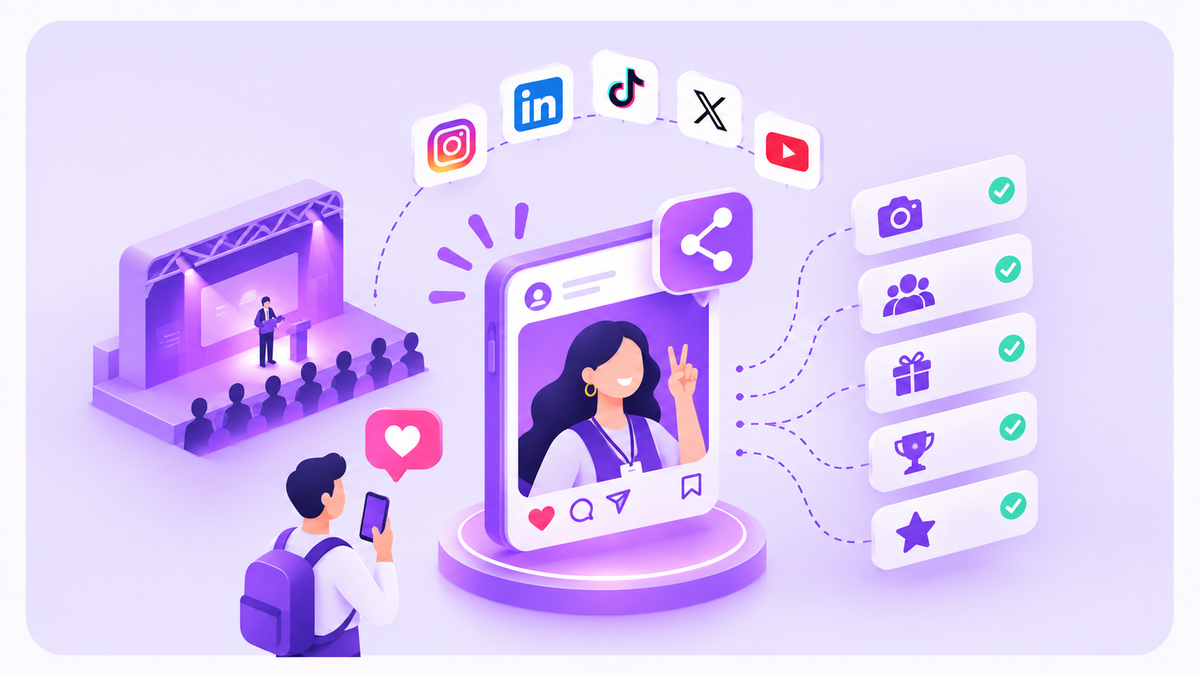
It's one of the biggest missed opportunities in event marketing. You have hundreds or thousands of people experiencing your event firsthand, but most of that experience never makes it beyond the venue.
And it's not necessarily because attendees don't want to share. They might love the event and still not post about it. They have to find a good photo, think of a caption, remember to tag the event, and figure out what to say. That's a lot of effort when they're already busy attending sessions and meeting people.
The solution isn't to keep asking people to post. It's to make sharing so easy that they actually want to.
Here are five ways to get more event attendees to share on social media, and turn those shares into something your marketing team can measure.
1. Give attendees content that's ready to share
Let's start with the obvious question: why should attendees have to create your marketing content from scratch?
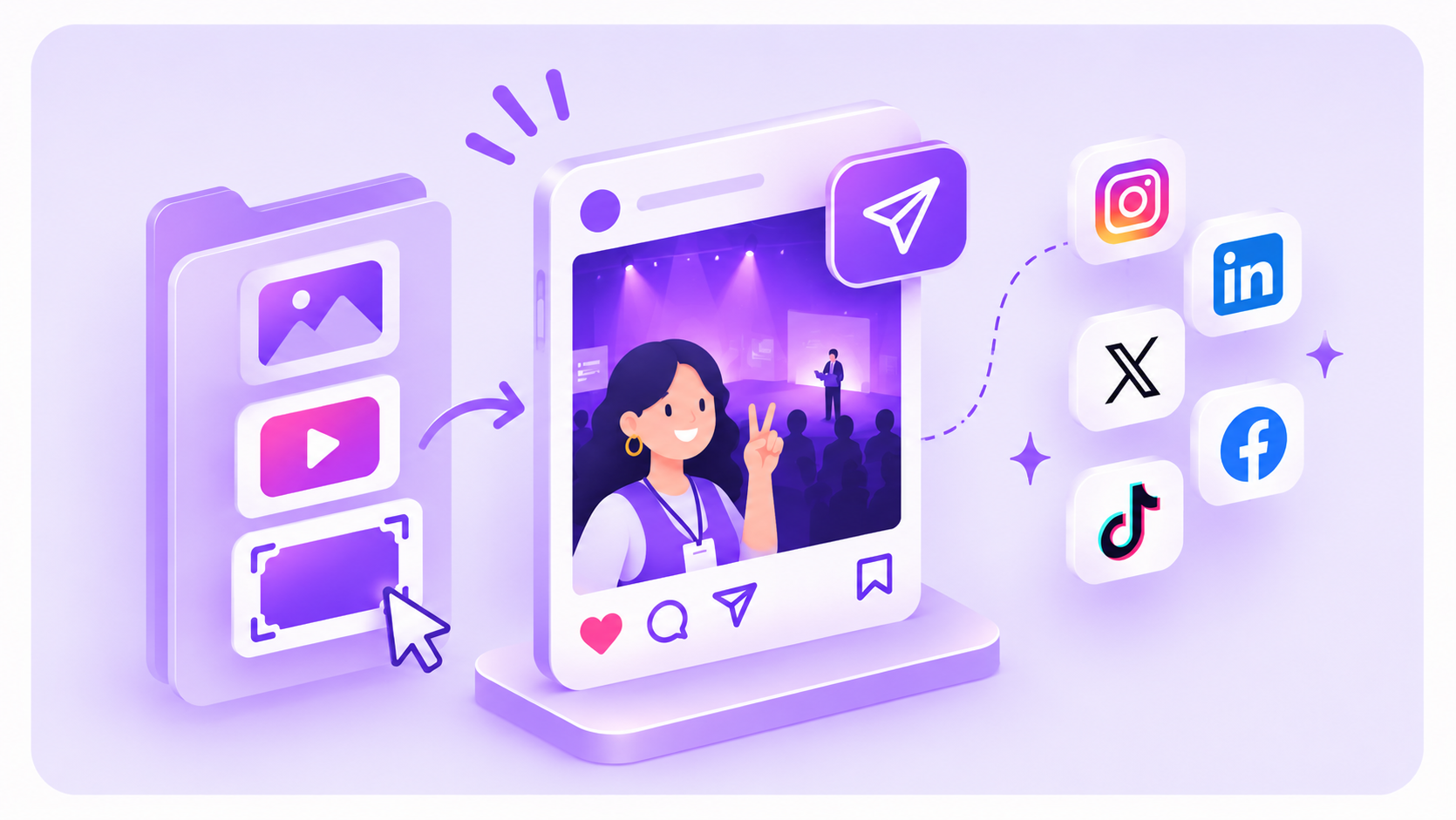
Instead of asking them to design a post, write a caption, and find an appropriate image, give them something that's already done.
Think personalised "I'm attending" posters with their name and photo, AI-generated avatar cards that match your event theme, or countdown graphics they can share on LinkedIn and Instagram.
The more personal the content, the more likely someone is to share it. A generic event banner promotes your event. A poster featuring an attendee makes it about them, too.
And the results can add up.
At the Khaleej Times Future Workforce Summit, nearly 80 attendees shared personalised "I'm Attending" posters. Those posts generated over 690 referrals to the event registration page. That's a lot of potential attendees reached without buying additional ad impressions.
You can see how it worked in the Khaleej Times case study.
Platforms like Premagic automate this process. Each registrant can receive a personalised, branded poster with a unique referral link, ready to share on LinkedIn, WhatsApp, or other channels. No designer needs to create hundreds of posters individually.
Try this: Add a personalised poster generator to your registration confirmation page or email. Give people something to share while the excitement of registering is still fresh.
2. Activate speakers before anyone else
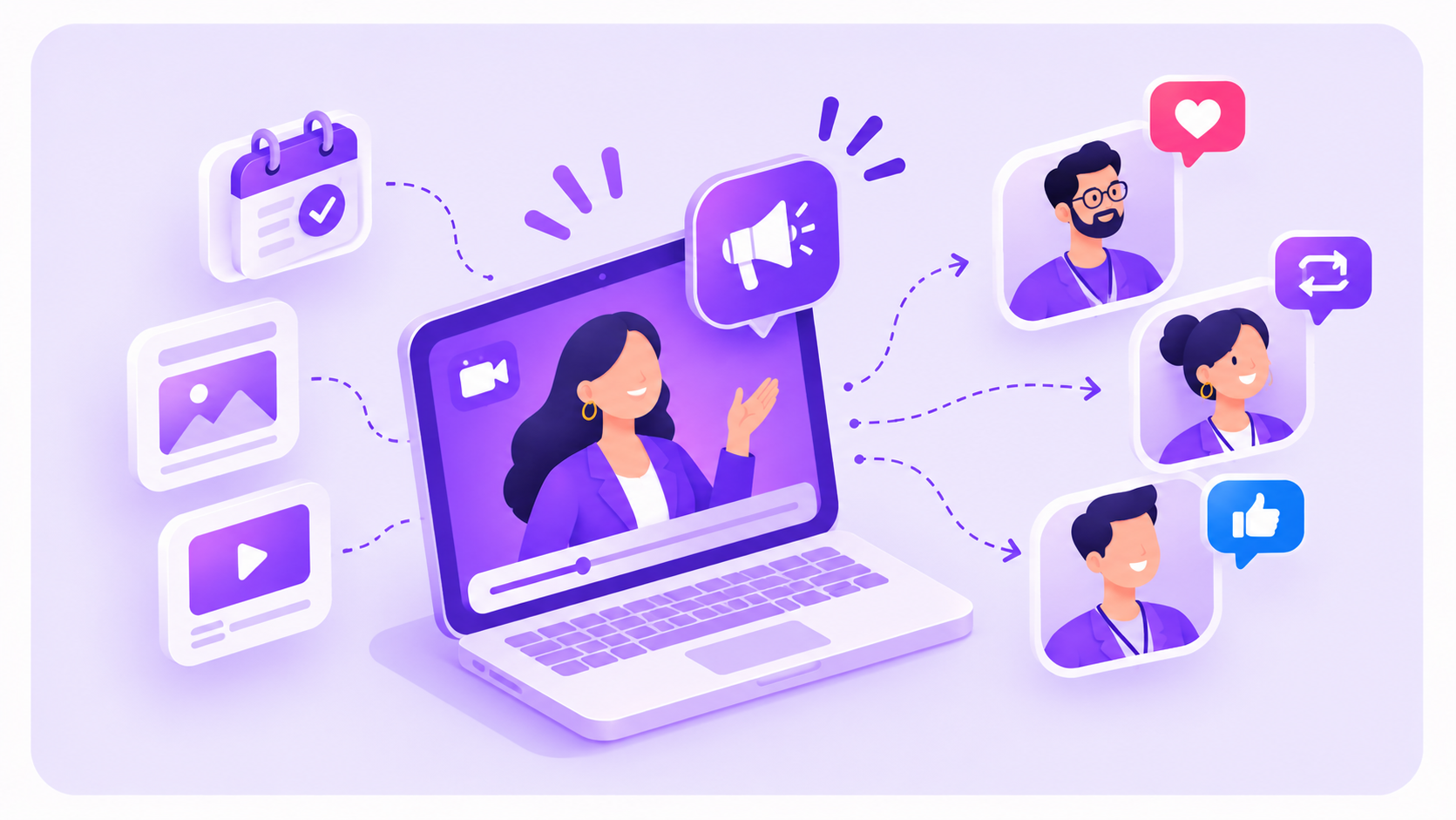
Your speakers aren't just people filling slots on the agenda. They're also people with professional networks that probably overlap with the audience you're trying to attract.
A speaker announcing their upcoming session can reach potential attendees who might never have seen your event ads.
Yet many organisers send speakers a generic promotional kit shortly before the event and hope for the best. The problem? Speakers are busy, and promoting your event isn't necessarily at the top of their to-do list.
Make it easier for them.
As soon as a speaker confirms, send them a personalised "I'm speaking at..." poster featuring their photo, session title, and event details. Add a ready-to-use LinkedIn caption and a unique registration link.
Don't stop at one announcement, either. Give speakers fresh reasons to share as the event approaches: a session teaser, a key takeaway, a countdown, or a question for their audience.
Premagic's speaker advocacy data shows that speaker-shared posters can drive up to 40% more event registrations. This is a directional planning figure based on events run on the platform, rather than a universal industry benchmark.
There's a similar opportunity with sponsors and exhibitors. They already have customers, prospects, and professional networks that overlap with your event audience. Give them branded content and shareable promotional assets that make it easy to invite their networks.
For a more detailed approach, check out our guide: How to get speakers to promote your conference.
Try this: Build speaker and exhibitor promotion into your event marketing timeline. Don't wait until the last few weeks to ask them to share.
3. Nudge the people who haven't shared yet
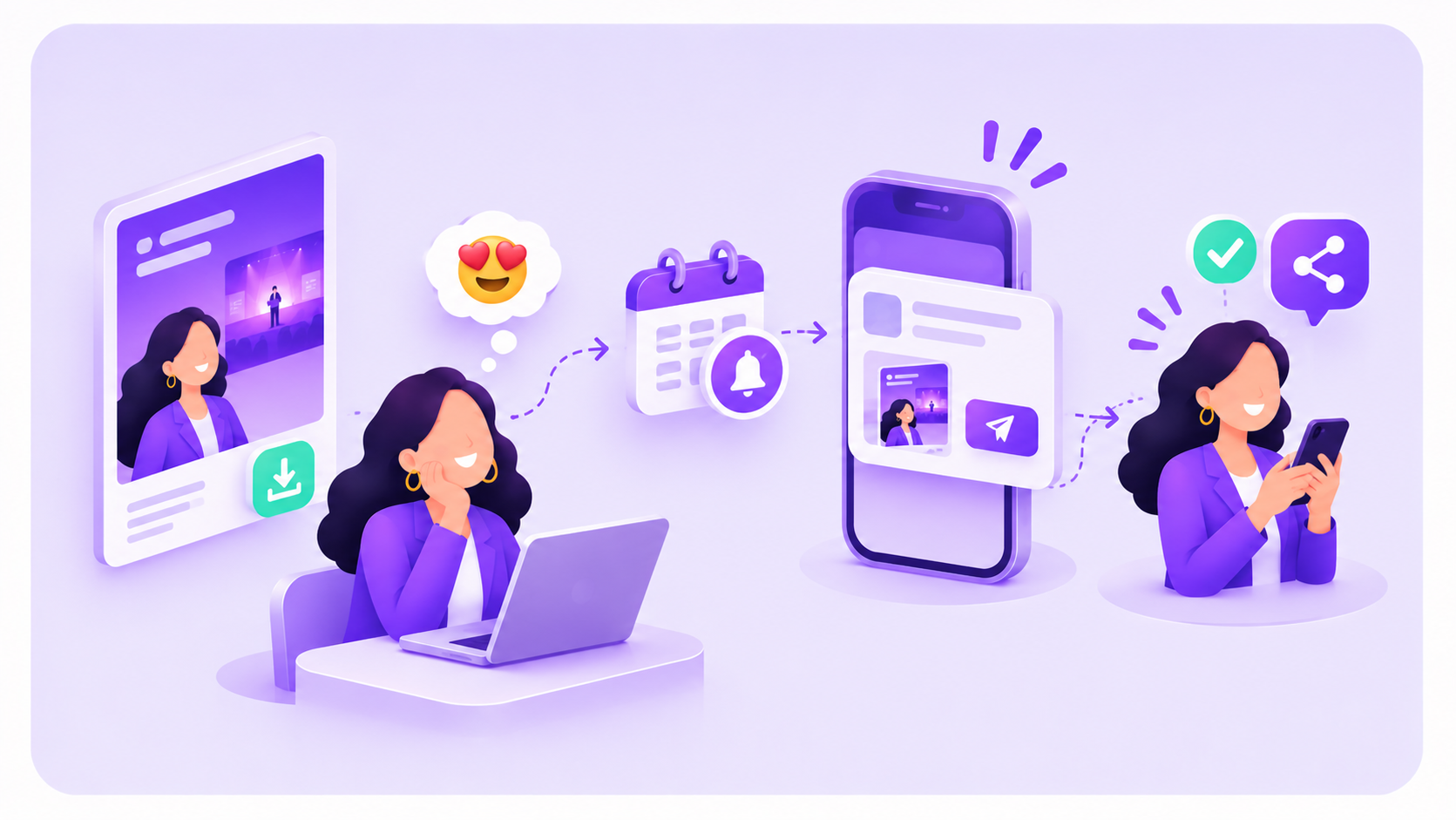
Someone generates their personalised poster. They look at it, think it's great, maybe even download it. And then... nothing.
It happens.
People get distracted. Meetings come up. The poster gets buried in their inbox. A little reminder can bring them back to it.
Instead of sending another email to everyone, identify the people who generated an asset but haven't shared it yet. Send them a friendly reminder three to five days later, with a fresh reason to post.
For example:
- "Your event poster is ready. Have you shared it with your network yet?"
- "Your colleagues might be heading to the event too. Let them know you'll be there."
- "Your session announcement is ready to go. Share it with your network."
The important thing is to avoid repeatedly nudging people who have already shared. Make reminders conditional on their activity.
And don't rely on email alone. WhatsApp can be a useful way to reach attendees who are more active on mobile, particularly across India and the Middle East.
At GITEX GLOBAL 2025, Premagic expanded its advocacy campaigns from email to WhatsApp. The case study reports increased engagement and advocacy activations, along with a noticeable uptick in weekend registrations. It also highlights stronger sharing from speakers and exhibitors.
Read more in the GITEX GLOBAL 2025 case study.
Try this: Set up a reminder for people who haven't shared their assets. Give them a new caption or content angle rather than sending the exact same message again.
4. Turn event photos into another wave of social sharing
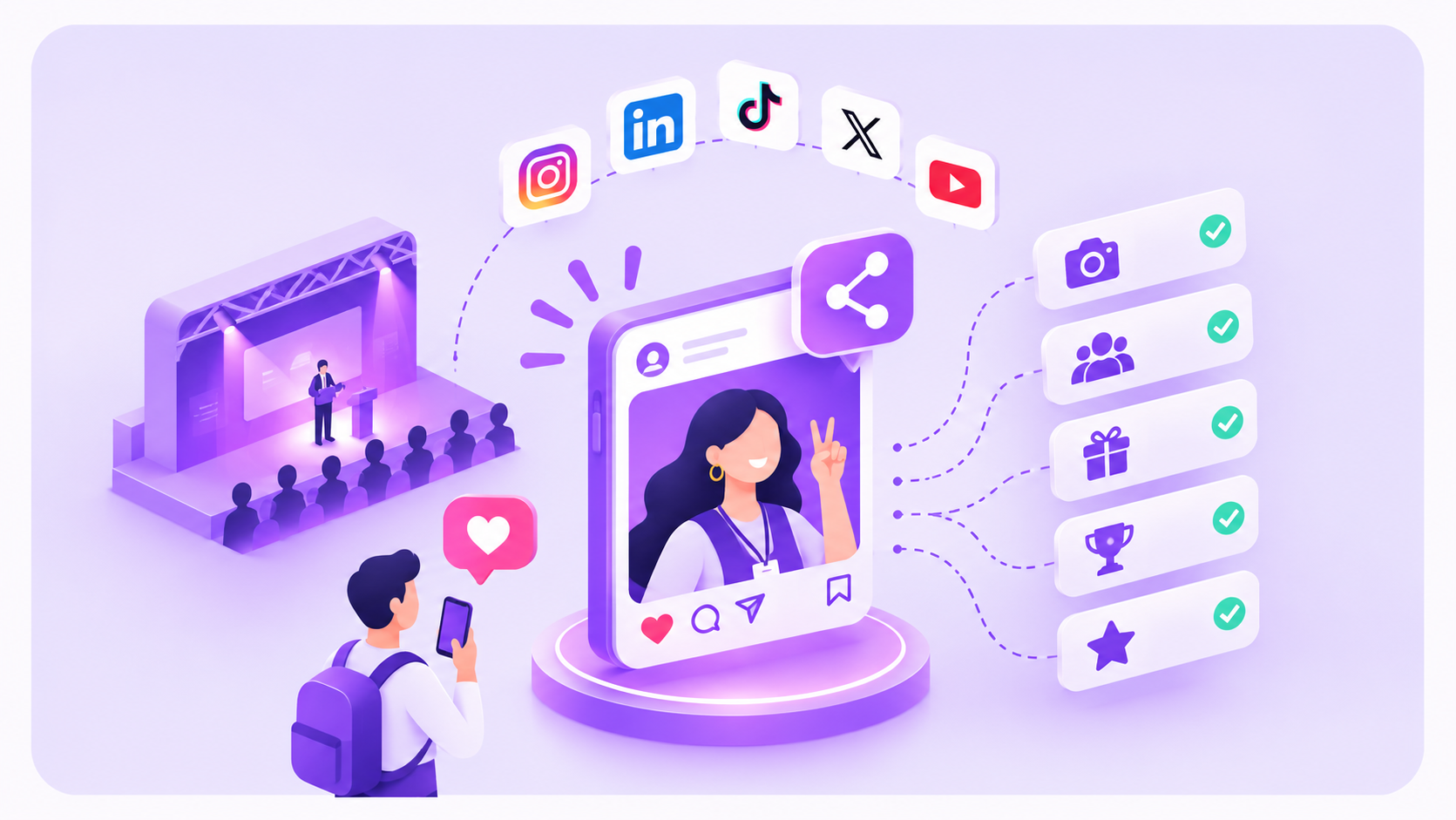
Your event photographer probably captures thousands of great moments. The question is: how many of those photos actually reach the people in them?
For many events, photos end up in a shared folder or gallery that attendees have to find themselves. By the time people get around to searching for their pictures, the excitement has often moved on.
There's a better way.
Deliver personalised event photos directly to attendees while the event is still happening. When someone receives a great photo of themselves, they're much more likely to share it with their network.
And you don't have to make attendees search through thousands of images to find it.
Premagic uses AI-powered face recognition to match attendees with their photos and deliver personalised galleries through WhatsApp and email. The platform's photo distribution page currently reports 99.9% facial recognition accuracy.
The AI-powered event photo distribution feature makes it easier for attendees to find, download, and share their photos without manually searching through the entire event gallery.
This can create a second wave of event visibility. Attendees share photos from the venue, tag speakers and colleagues, and keep the event appearing in social feeds even after the sessions end.
The IDC Middle East CIO Summit 2025 is a good example of how different content formats can work together. Using Premagic, IDC distributed personalised photos, created AI avatars, and activated poster campaigns. More than 6,147 professional photos were matched and delivered, while nearly 1,000 custom avatars were created by 286 attendees.
See the results in the IDC case study.
For more on the role of attendee-created content, take a look at the Attendee Content Impact Report 2025.
Try this: Don't wait until the event is over to distribute photos. Set up automated photo delivery so attendees can share their moments while they're still at the venue.
5. Track who shared and which registrations came from them
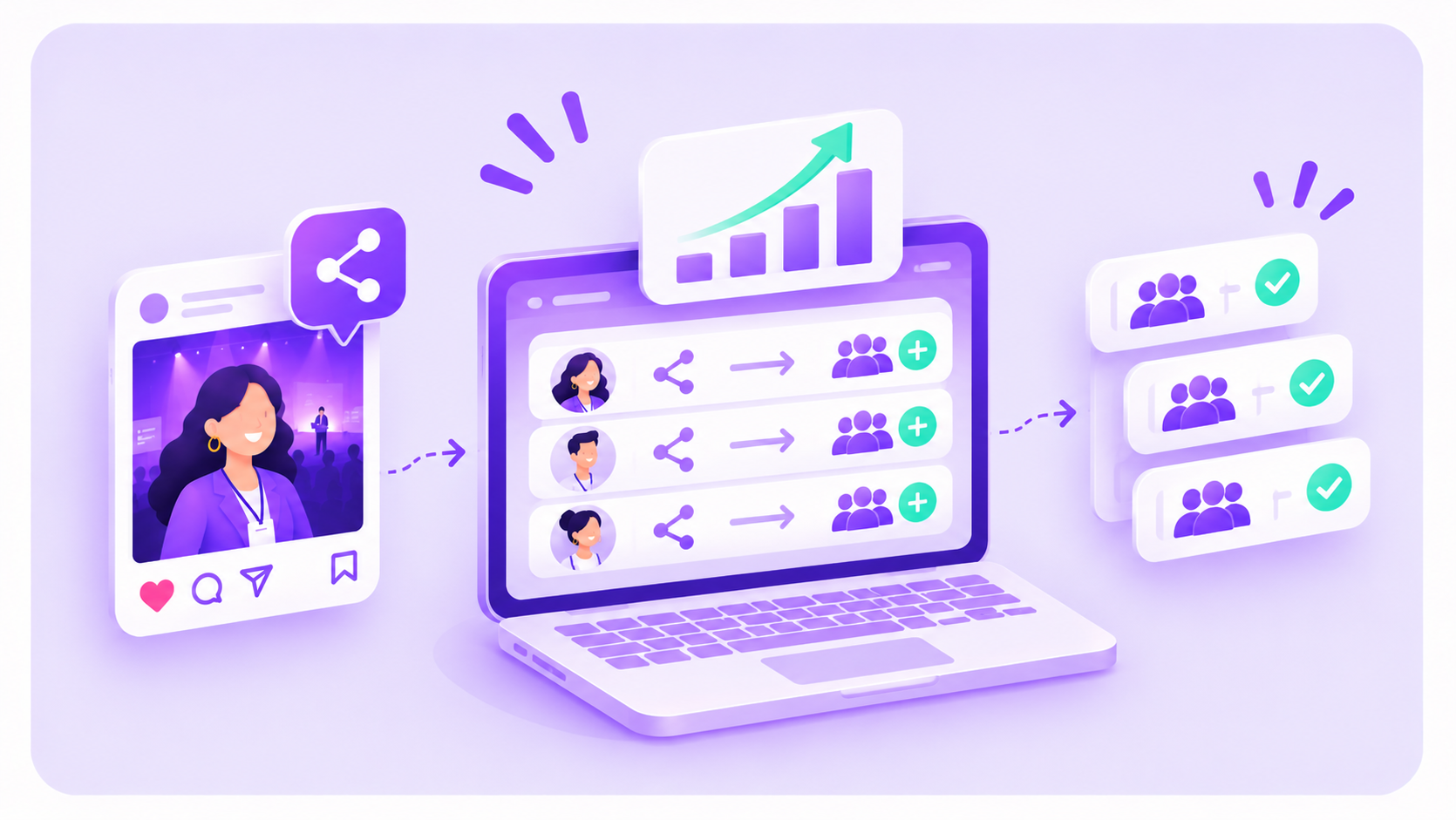
Here's where many event marketing campaigns fall short.
You encourage attendees to share, see a few LinkedIn posts, and notice some activity. But when someone asks how many registrations those posts generated, you don't have a clear answer.
Likes and impressions are useful signals. But if you're using attendee sharing as a registration channel, you need to know whether it actually brought people in.
Give every advocate a unique referral link. That way, you can track which attendee, speaker, or exhibitor generated clicks and registrations.
It also helps answer some useful questions:
- Which group generated the most referrals: attendees, speakers, or exhibitors?
- Which types of content led to actual registrations?
- Who are your most active advocates?
- How many registrations came from organic sharing rather than paid campaigns?
At the IDC Middle East CIO Summit 2025, 212 participants generated 1,074 referral links, which drove 1,133 unique clicks. The advocacy campaign recorded a 7,245% ROI.
With Premagic, unique referral links are assigned to personalised assets, and organisers can track clicks, advocate activity, and attributed registrations through the dashboard.
For a deeper look at setting up attribution, read How to track which attendees drive your registrations.
Try this: Start with one unique referral link per advocate. Track registrations, not just clicks. That's how you find out which sharing activities deserve more investment next time.
Your attendees are already a marketing channel. Are you using it?
Your attendees, speakers, sponsors, and exhibitors already have networks full of people who might be interested in your event.
You don't need to turn them into professional marketers. You just need to give them something worth sharing and make it easy to do.
Start with personalised content before the event. Activate speakers and exhibitors early. Follow up with people who haven't shared. Deliver photos while the event is still fresh. And track every referral back to its source.
That's the foundation of event advocacy marketing: turning the people who participate in your event into people who help promote it.
And if you're looking to do this without manually creating hundreds of assets, chasing people over email, or managing referral links in spreadsheets, that's exactly what Premagic is built to help with.
Your next event already has a marketing team. It's time to activate it.