Event Tech Live London 2026: 10 sessions worth making time for
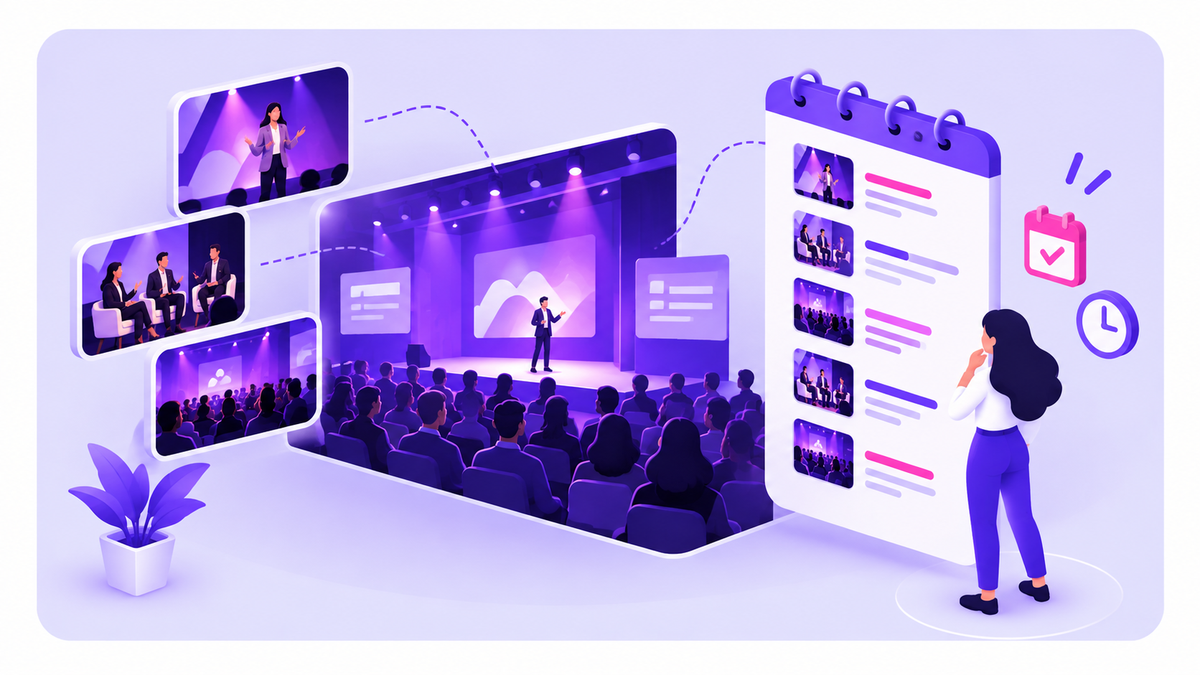
Event Tech Live London takes place on 11–12 November 2026 at ExCeL London. And if you’ve looked at the agenda, you’ll know the problem: there’s a lot to see, a lot to learn, and absolutely no way to be in four places at once. (We checked.)
So, instead of giving you a list of sessions that simply sound interesting, we’ve picked 10 worth considering if you care about the things event teams are actually measured on: registrations, sponsor value, pipeline, attendee engagement, and proving that all this work made a difference.
We’ve grouped them around three questions:
- Can AI and event tech help us work smarter?
- How do we turn event activity into measurable business results?
- How do we get people to engage with events, not just show up?
And if you're heading to ETL, come say hello. Premagic will be at booth B4. More on that below.
First, a quick look at the agenda
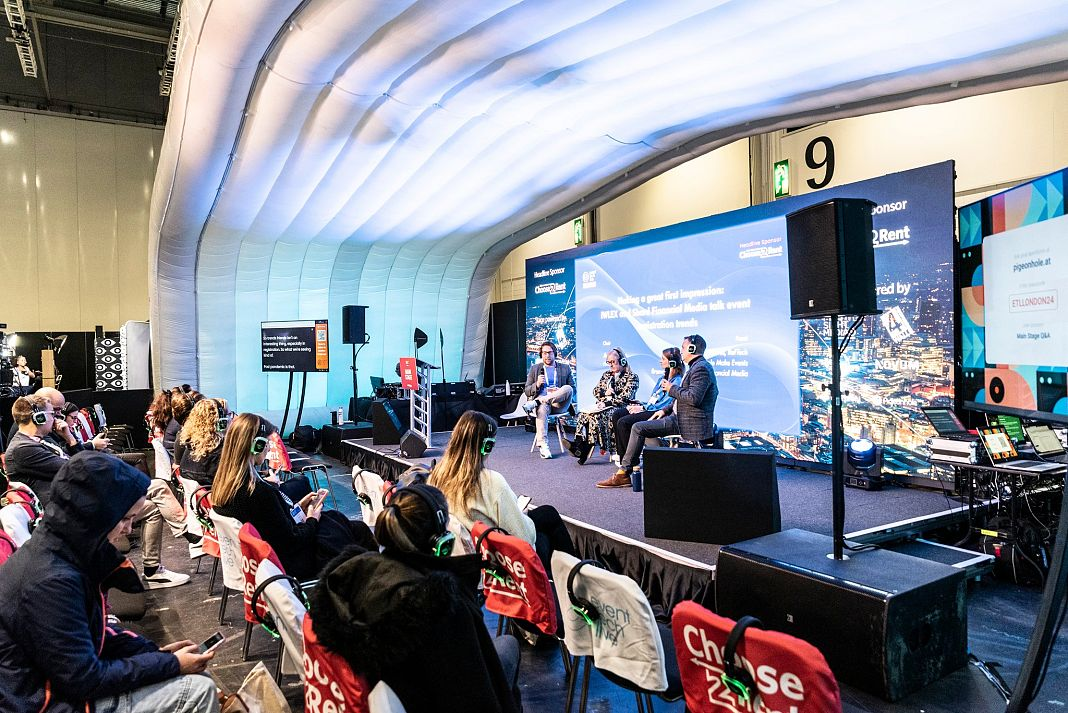
The official Event Tech Live agenda has four stages: Main Stage, AI & Innovation, MarTech & Growth, and Experiential & Engagement.
Our advice? Don't try to attend everything. Pick sessions around the problem you're trying to solve, and leave some time between talks to visit exhibitors, ask questions, and compare notes with people who are dealing with the same challenges.
A packed notebook is nice. A useful idea you actually implement is better.
Wednesday, 11 November: AI, data and sponsor value
1. Cheaper or worth more? The argument about what AI is really for in events
11:00–11:45 | Main Stage
AI can save time. It can reduce manual work. It can also become another subscription that everyone forgets to use after the first month.
This panel brings together event leaders to discuss whether AI is primarily about cutting costs or creating more value. Listen for examples of what changed after implementation, not just what the technology can do.
The question to take with you: Did AI reduce costs, improve the attendee experience, generate revenue, or do all three? And how did the team measure it?
2. Your Reg System Talks to HubSpot. Now What? Building the Data Infrastructure That Actually Works
11:20–11:50 | MarTech & Growth Stage
A registration platform connected to your CRM sounds great. Until someone asks where a lead came from, and three people give three different answers.
This session looks at what happens after event registration data reaches HubSpot. Pay attention to data quality, source tracking, and what the team does with the information once it's synced.
The question to take with you: Which fields and tracking rules need to be in place for sales and marketing to trust the data?
If this is a challenge for your team, our guide to event marketing tools is a useful companion read.
3. Less Booth, More Influence: A Soft-Power Playbook for B2B Event ROI
13:20–13:50 | MarTech & Growth Stage
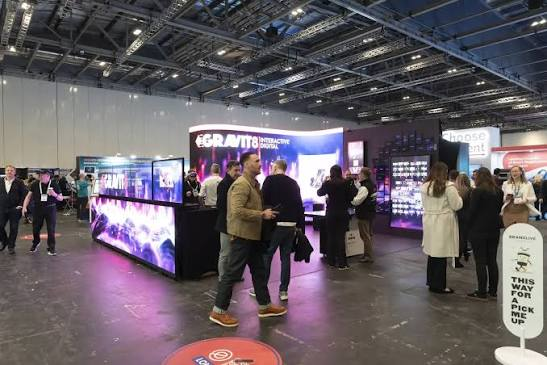
A busy booth looks good in photos. But when renewal conversations start, sponsors usually want more than a photo of a crowd.
This session explores how B2B events can demonstrate influence and value beyond booth traffic. Think about the conversations, content, and follow-up activity that happen around an event, not just the scans collected at the stand.
The question to take with you: What can you show a sponsor that connects event participation to meaningful outcomes?
You might also like our guide to activating exhibitors and sponsors.
4. After the Applause: How to Monetise Your Content and Prove ROI on Your Speakers
14:25–14:55 | Main Stage
The keynote ends. Everyone claps. The speaker leaves. And sometimes, the content disappears into a folder that no one opens again.
This session looks at how event content and speaker participation can keep delivering value after the session ends. The interesting part is what happens next: how content gets distributed, who sees it, and whether it helps generate registrations, leads, or future opportunities.
Speakers can also be a powerful acquisition channel before the event, not just a line on the agenda. Our speaker promotion playbook covers how to help speakers promote their sessions using trackable links.
The question to take with you: How can you extend a speaker's value beyond the 30 minutes they spend on stage?
5. AI Workshop: 5 Practical Workflows That Clear Your Event To-dos & Personalise the Attendee Experience
15:05–15:35 | AI & Innovation Stage
This is the one to attend if your team has more tasks than people. Which, let's be honest, describes quite a few event teams.
The session focuses on practical AI workflows for clearing to-dos and personalising the attendee experience. Go in with a real problem rather than a vague desire to “use more AI.”
The question to take with you: Which workflow could you test next week without a six-month implementation project?
Thursday, 12 November: adoption, engagement and better measurement
6. AI Is Everywhere. Trust Isn't.
10:40–11:10 | AI & Innovation Stage
AI tools are moving quickly, but adoption depends on more than what a tool promises. Teams need to understand where AI helps, where human judgement still matters, and what makes people comfortable using it.
This session is worth considering if you're evaluating AI tools or trying to get your team to use the ones you've already bought.
The question to take with you: What needs to be true for your team and your attendees to trust an AI-powered experience?
7. Beyond English: Building Truly Global Events That Drive Engagement
10:40–11:10 | Experiential & Engagement Stage
An event can be international without feeling equally accessible to everyone in the room. Language, cultural context, and the way information is delivered all affect how people participate.
For teams running events across markets, this session is a reminder to think beyond translation and consider the full attendee experience.
The question to take with you: What makes an attendee feel included and able to participate, rather than simply present?
8. Beyond the Heatmap: Using Photo Mapping to Prove Hard Pipeline
11:55–12:25 | Main Stage
Engagement reports often tell you what happened: people visited a space, interacted with an activation, or stopped at a booth. The harder question is what those interactions led to.
This session looks at connecting event activity with pipeline. It’s particularly relevant if you're trying to move reporting beyond attendance and engagement counts.
The question to take with you: How do you connect an observed interaction to a meaningful business outcome without overclaiming what the data proves?
9. Adoption by Design: The Science Behind Event Technology People Actually Use
12:00–12:30 | Experiential & Engagement Stage
Buying event technology is the easy part. Getting people to use it is where things get interesting.
This session explores why people adopt some experiences and ignore others. Look for ideas around reducing friction, making the next action obvious, and designing experiences around actual attendee behaviour.
The question to take with you: What could you remove or simplify to make the experience easier to use?
The same thinking applies to attendee sharing. If you want people to post about your event, make it easy for them to do so. Our guide to event advocacy marketing explains how personalised assets and simple sharing flows can help.
10. Feel Everything, Measure Everything. How much data is too much data?
13:20–13:50 | AI & Innovation Stage
Event teams can track a lot: registrations, app activity, session attendance, engagement, downloads, sponsor interactions, and more. But a dashboard with 40 metrics doesn't automatically make a team better at making decisions.
This session gets to the question behind all that reporting: which data is useful, and when does measurement become noise?
The question to take with you: Which three metrics would actually change a decision your team makes?
For another perspective, read our guide on how to calculate earned media value for events. It covers how to put a value on organic reach while keeping estimated exposure separate from actual business outcomes.
Planning note: several sessions overlap, including the two Thursday sessions at 10:40 and the 11:55/12:00 sessions. Check the official agenda before finalising your schedule.
How to choose what to attend
If you can't make every session, choose based on the problem you need to solve this quarter.
- Registrations are falling behind: Prioritise the registration data session and think about how you can reach relevant audiences beyond paid campaigns.
- Sponsors want better proof of value: Start with the sponsor ROI session and the discussion about connecting engagement to pipeline.
- Your team has invested in tools people barely use: Put adoption and practical AI workflows near the top of your list.
- Your reports are full of activity but short on outcomes: Focus on data infrastructure, pipeline measurement, and deciding which metrics matter.
One small suggestion: after each session, write down three things. The metric discussed, the person on your team who needs to know about it, and one action you can test. Otherwise, there's a fair chance your notes will become a very well-organised collection of things you meant to do.
A little look back at Event Tech Live 2025
Last year was a big one for Premagic. We attended Event Tech Live in London and came away with our first-ever Event Technology Award, winning Best Use of Technology for Marketing an Event.
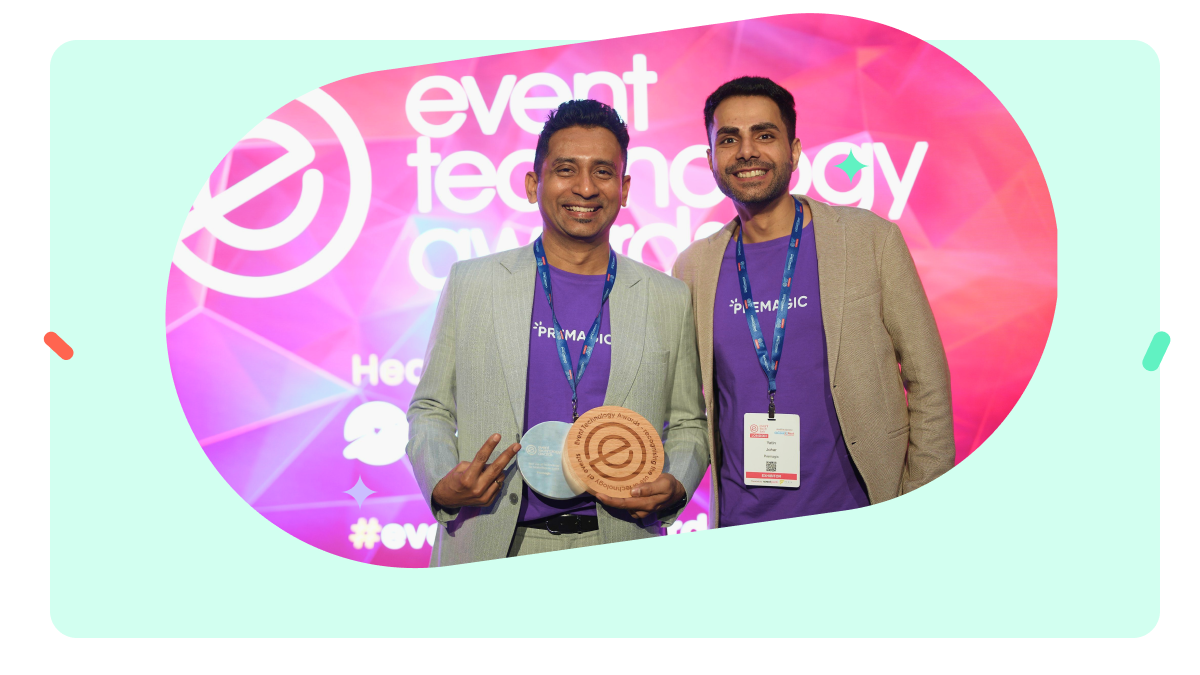
The recognition meant a lot to our team because it reflected something we've been building towards: helping event organisers connect attendee engagement with measurable marketing outcomes.
We also took part in conversations about real-time AI and its role in event experiences. If you want a look back at those discussions, here's our recap: Real-time AI for events: highlights from the ETL 2025 panel.
We're heading into 2026 with more to share, more to learn, and plenty of questions of our own about where event marketing goes next.
Come meet Premagic at booth B4
We'll be at booth B4 at Event Tech Live London 2026, and we'd love to meet event organisers, marketers, agencies, and event tech teams.
At Premagic, we're working on a simple idea: your attendees can do more than attend your event. With the right experience, they can help market it, too.
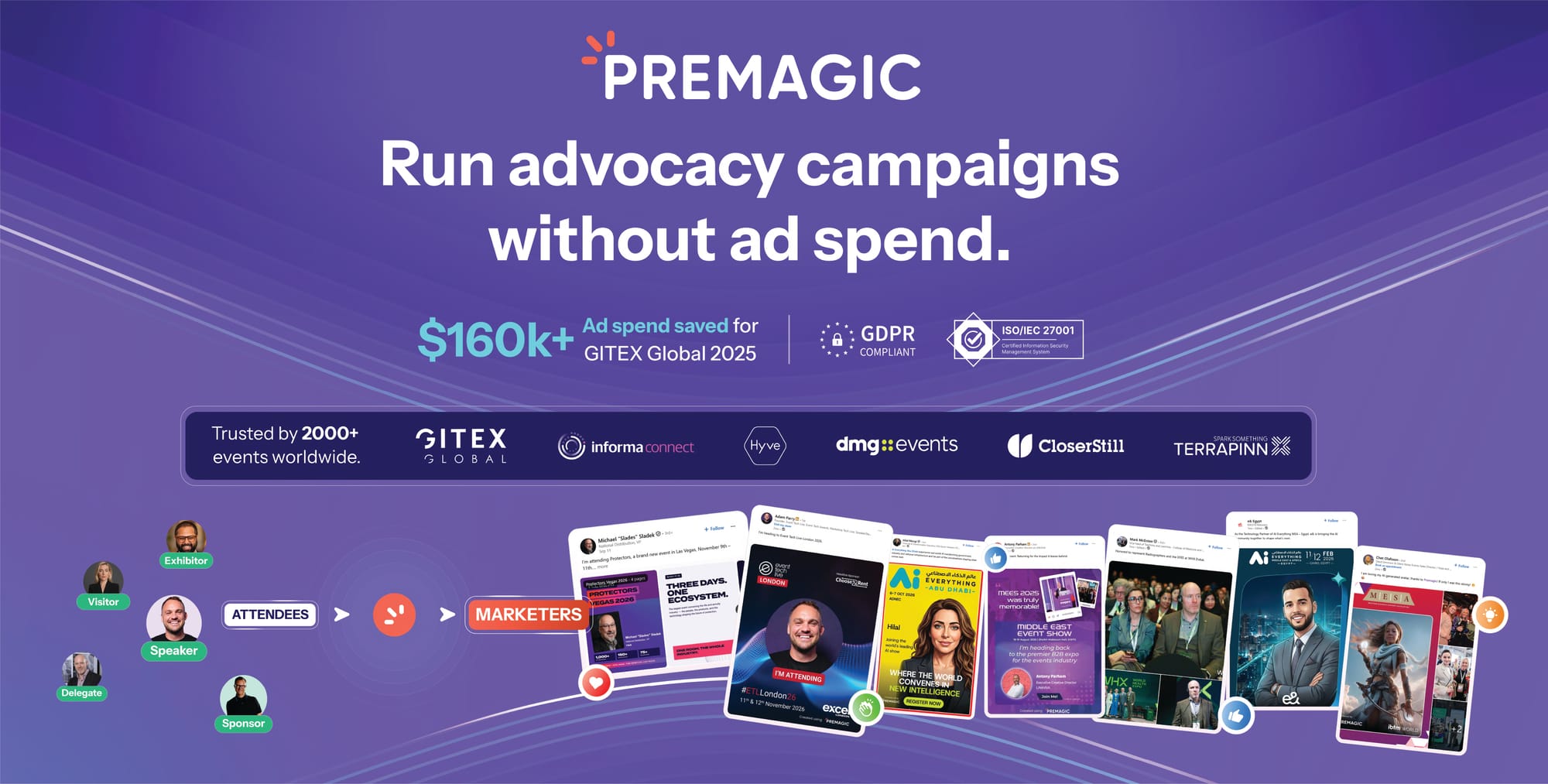
That can start before the doors open, with personalised “I'm attending” posters and speaker assets that help people spread the word. During the event, AI-powered photo delivery and avatar experiences give attendees something personal to share. After the event, those moments can keep circulating, helping extend reach beyond the venue.
And it's not just about getting more posts. With tracked sharing and referral links, organisers can see who shared, how people engaged, and which activity helped drive registrations.
If you're exploring how to connect attendee experience with measurable event marketing, stop by B4. We'll be happy to show you what we're building and hear what your team is trying to solve.
You can also explore our event advocacy guide before the show.
Going to ETL? Post a fun avatar!
Let the world know you're heading to Event Tech Live London 2026! Create your own ETL avatar, share it on LinkedIn, and let your network know you'll be there.
It takes just a few clicks to get your avatar ready to share: Create your ETL avatar →
And while you're at ETL, come say hi to the Premagic team at booth B4. We'd love to meet you!
Before you head to ExCeL
A quick checklist to make the two days more useful:
- Pick the sessions that match your biggest challenge.
- Check the agenda for any timing changes.
- Bring one real question about your data, sponsor reporting, or attendee engagement.
- Leave time to talk to exhibitors and peers.
- Visit Premagic at booth B4.
Event Tech Live is a good place to discover what event technology can do. The real value comes from working out which ideas are worth taking back to your own events.
See you in London!