Event Marketing Tools: A Buyer's Guide by Category
Skip the vendor listicles. Here's how to build your event marketing stack by category, with the buying criteria that matter for each.
Search "event marketing tools" and you'll get listicles: 25 tools, three sentences each, half of them not actually marketing tools, ranked by who has the best affiliate program.
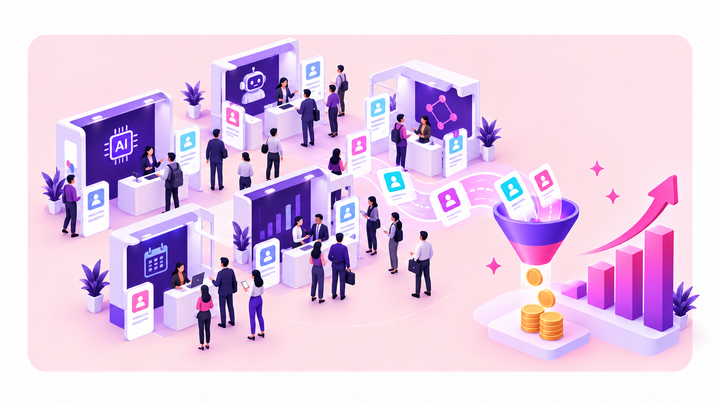
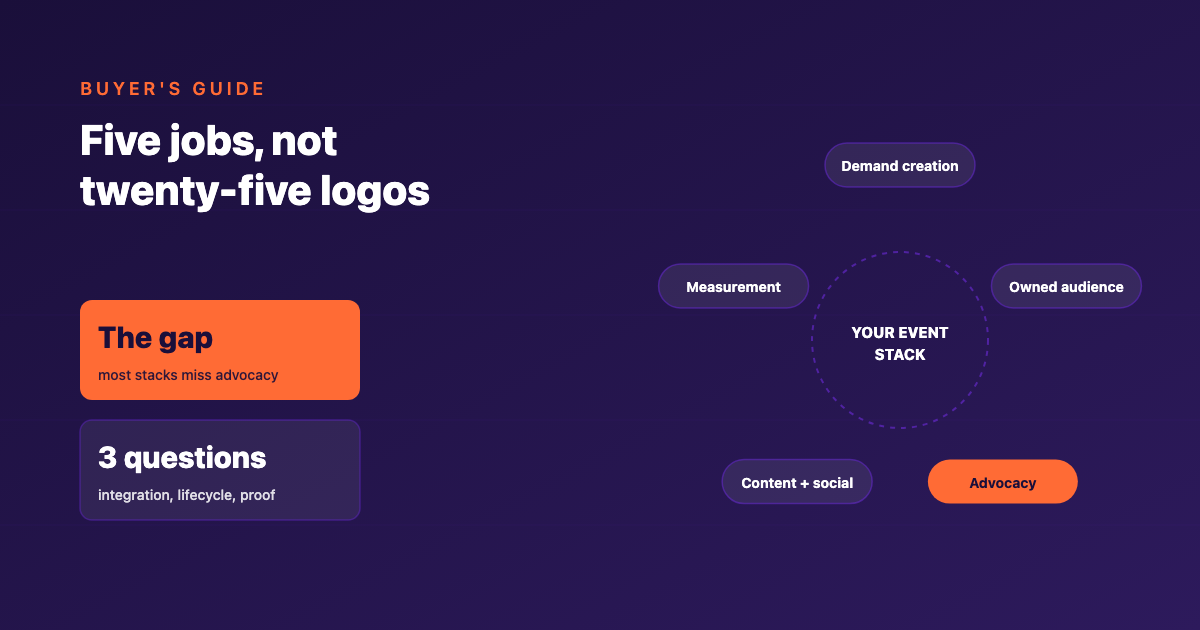
Here's a more useful way to think about it. Your event marketing stack has five jobs. Buy for the jobs, evaluate against criteria, and ignore the rankings entirely.
First, separate operations from marketing
A lot of "event tech" is operational: registration processing, agendas, badging, session logistics. Necessary, but none of it gets a single extra person through the door.
Event marketing tools do one of two things: they get more of the right people to register, or they prove what the event achieved. Keep that filter in mind and the category gets much smaller than the listicles suggest.
The five jobs of an event marketing stack
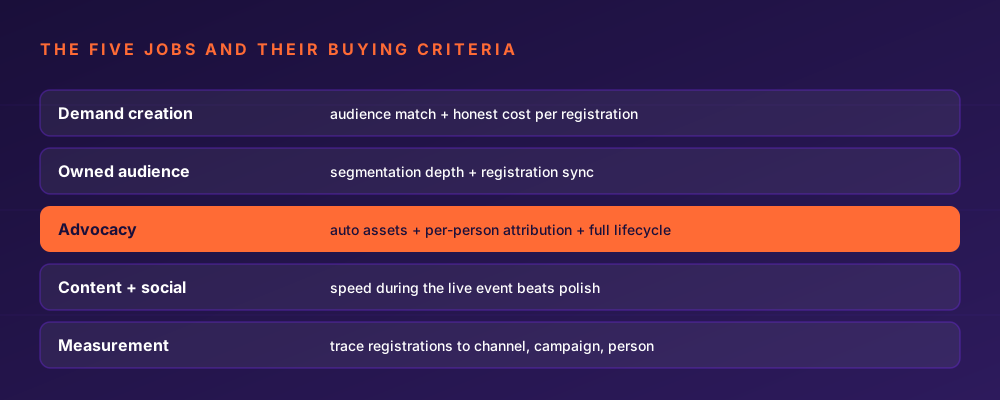
1. Demand creation (rented reach). Paid social, search ads, sponsorship of newsletters and communities. This is where most budgets start, and where costs climb every year, because you're renting someone else's audience. Buying criteria: audience match and honest cost-per-registration tracking, not platform features.
2. Owned-audience activation. Your email platform and CRM, working your house list. The workhorse. Criteria: segmentation depth (past attendees vs prospects vs no-shows behave differently) and clean integration with your registration data, so invitations stop when someone registers.
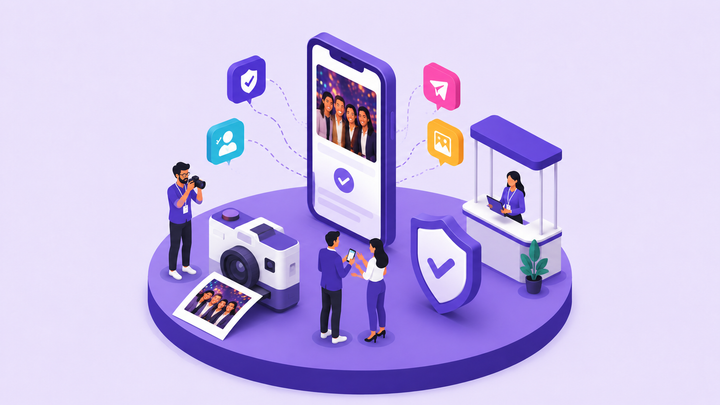
3. Advocacy (borrowed trust). The newest category and the one most stacks are missing: event advocacy tools that turn your registered attendees, speakers, sponsors, and exhibitors into a promotion channel. Personalized shareable assets (posters, avatars, photos), one-tap sharing, and a unique referral link per person so every driven registration is attributed.
This category earns its slot on math the other two can't match: peer shares convert to registrations at roughly 1 in 3, and the audience it reaches (your participants' professional networks) is precisely your target list. Criteria: does it generate assets automatically from registration data, does it track through to completed registrations, and does it cover the full lifecycle, pre-event posters through post-event photos? This is the category Premagic sits in.
4. Content and social presence. Your social scheduling, video editing, and design tooling: the machinery for the event's own channels. Criteria: speed during the live event matters more than polish. A same-day clip beats a next-week highlight reel.
5. Measurement and attribution. Whatever proves the event worked: UTM discipline, referral tracking, sponsor analytics, pipeline reporting in your CRM. Often not a separate tool but a requirement you impose on every other tool. Criterion: can you trace a registration back to the channel, campaign, and person that drove it?
The three questions that matter more than any feature list
Does it integrate with your registration platform? Registration data is the spine of event marketing. Any tool that needs CSV exports to function will be six days stale by show time. Webhook-level sync (a registration flows in seconds after it happens) is the standard to demand.
Does it cover the lifecycle or one slice? Events aren't a launch date, they're a cycle: build-up, live, afterlife, next edition. Tools that only work in one phase leave you stitching together three vendors and re-uploading the same attendee list. The UFI Global Exhibition Barometer found 95% of exhibition companies say their formats need improvement, with participatory engagement the top ask. Participation isn't a phase; it runs the whole cycle.
Can it prove its own ROI? Every tool will claim impact. The good ones show attribution: this feature drove these registrations, this asset produced this reach. If a vendor can't show you their reporting on a real event, the impact is theoretical.
A sane stack for a mid-size B2B event team
For a team running 3 to 20 events a year, the pattern that works:
- One registration platform as the system of record (whatever you have; the point is everything connects to it)
- One email/CRM motion for the house list
- One advocacy platform activating attendees, speakers, and sponsors, with per-person attribution
- Paid spend as a variable dial, sized by what the other channels haven't filled
- UTM and referral discipline across all of it, so the post-event report is a channel comparison, not a guess
Notice what's missing: the eleventh-hour "engagement app" nobody downloads and the AI tool bought because the demo was cool. Where AI genuinely earns a slot in the stack is its own question. Every tool must map to one of the five jobs, or it's shelf-ware with a login.
The takeaway: stop shopping for tools and start staffing jobs. Rented reach, owned lists, borrowed trust, content, and proof. Fill the advocacy gap first if you have one, because it's the only channel on this list where the audience is free and already yours.
Want to see what the advocacy slot in your stack looks like in practice? Check out Premagic →