The Speaker Enablement Kit: Templates you can copy today
The exact speaker enablement kit to send at confirmation: outreach email, three LinkedIn post templates, and the asset checklist. Copy and adapt.
We've written before about why speakers don't promote your conference: it's a systems problem, not a motivation problem. This post is the system, in copy-paste form.
Send this kit within 48 hours of a speaker confirming. That timing matters: confirmation is when their commitment is freshest and their calendar hasn't buried you yet.
What goes in the kit
- The outreach email (below)
- Three LinkedIn post templates with [FILL IN] blocks
- Their personalized "I'm speaking" asset
- Their unique referral link
- One comment template for your own team
That's it. Kits fail from bloat more than from thinness. A 14-page "speaker brand guidelines" PDF gets archived; five things that take four minutes get used.
The outreach email
Subject: Your session at [EVENT], everything you need in one place
Hi [NAME],
We're excited to have you speaking on [TOPIC] at [EVENT] on [DATE].
To make promoting your session effortless, everything is below: a personalized "I'm speaking" graphic, three post drafts you can adapt in a couple of minutes, and your personal registration link so you can see exactly what your posts drive.
No obligation and no schedule, though posts in the two weeks after this email tend to perform best. If you'd like a different angle or format for the graphic, reply and we'll make it.
[YOUR NAME]
Notice what it doesn't do: beg, guilt, or assign homework. It hands over finished work and one reason to care (the personal link).
Three LinkedIn post templates
Template 1, the teaser (send at confirmation):
I'm going to talk about something I've never presented publicly before.
At [EVENT] on [DATE], I'm breaking down [TOPIC]: [ONE-SENTENCE HOOK, e.g. "why most teams get X wrong, and the approach that fixed it for us"].
If you work in [AUDIENCE], this one's for you. Register here: [LINK]
Template 2, the "what I'll cover" (2-4 weeks out):
Here's what I'll be covering at [EVENT]:
• [POINT 1: a pain the audience recognizes]
• [POINT 2: the counterintuitive insight]
• [POINT 3: what attendees will walk away able to do]
[DATE], [CITY / ONLINE].
Registration: [LINK]
Template 3, the post-event recap (within a week after):
3 things I took away from [EVENT]:[TAKEAWAY][TAKEAWAY][TAKEAWAY]
Thanks to everyone who came to my session on [TOPIC]. The conversation afterward about [SPECIFIC MOMENT] was the highlight.
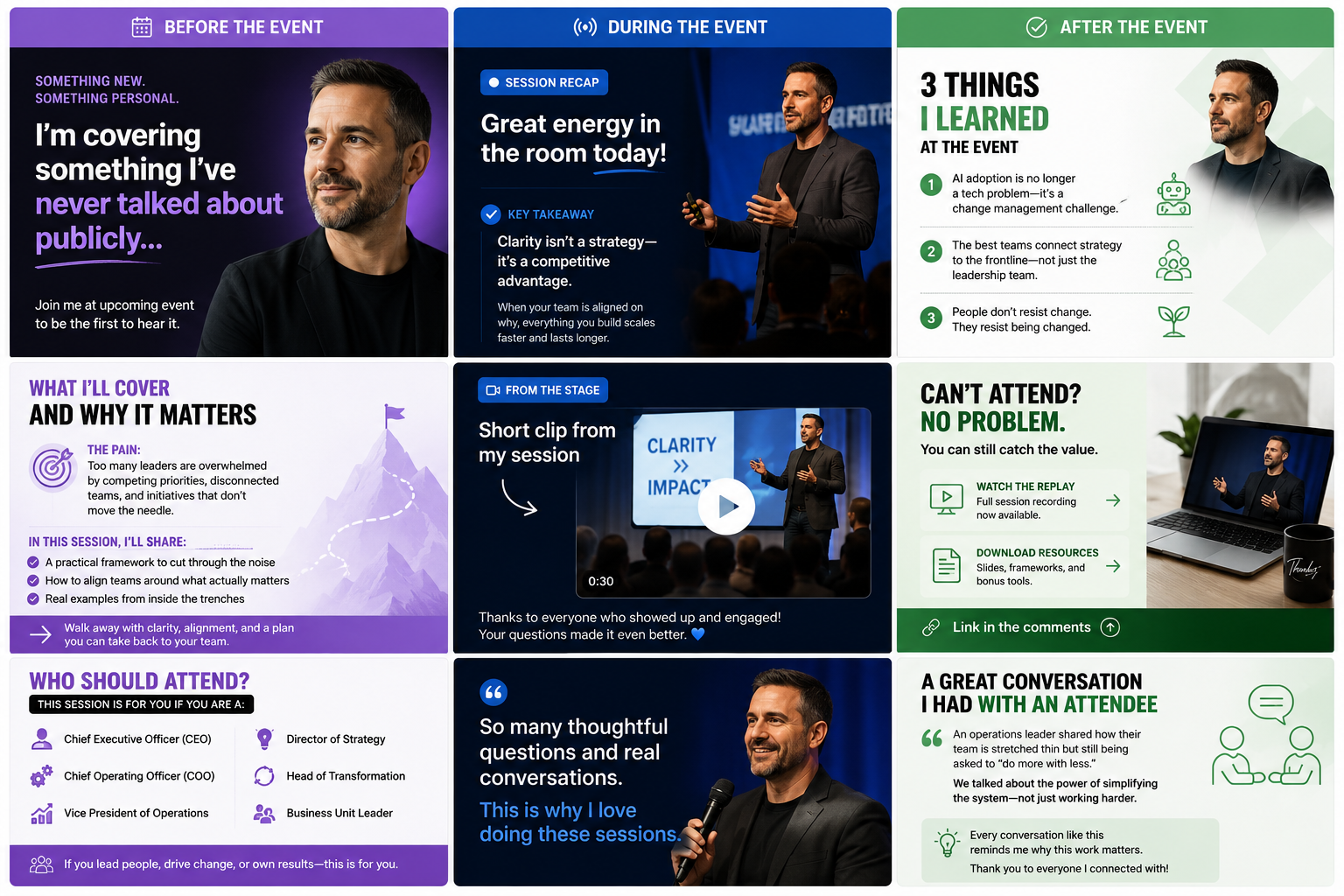
Tell speakers explicitly: edit these until they sound like you. A template posted verbatim by four speakers is a spam pattern; a template adapted by each is a campaign.
The asset and the link
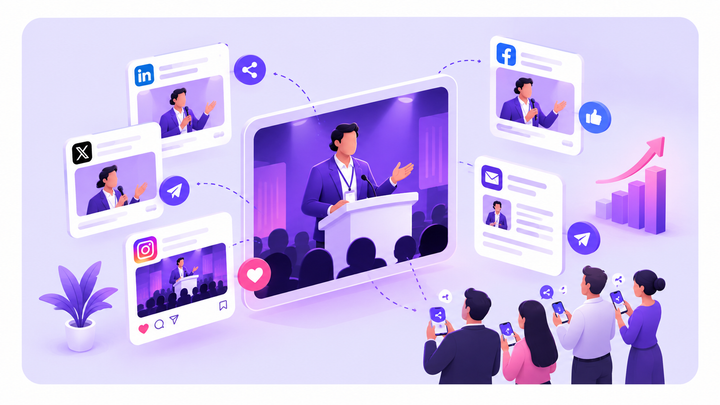
The graphic should be personalized (their name, photo, session title), mobile-first, and delivered as a ready file, not a Canva-style link that assumes they'll finish the job. The mechanics are the same ones that make "I'm attending" posters work for attendees: personal, finished, one tap from posted. If you're generating these at scale, an advocacy platform like Premagic creates them automatically from your speaker list, each with a unique referral link baked in.
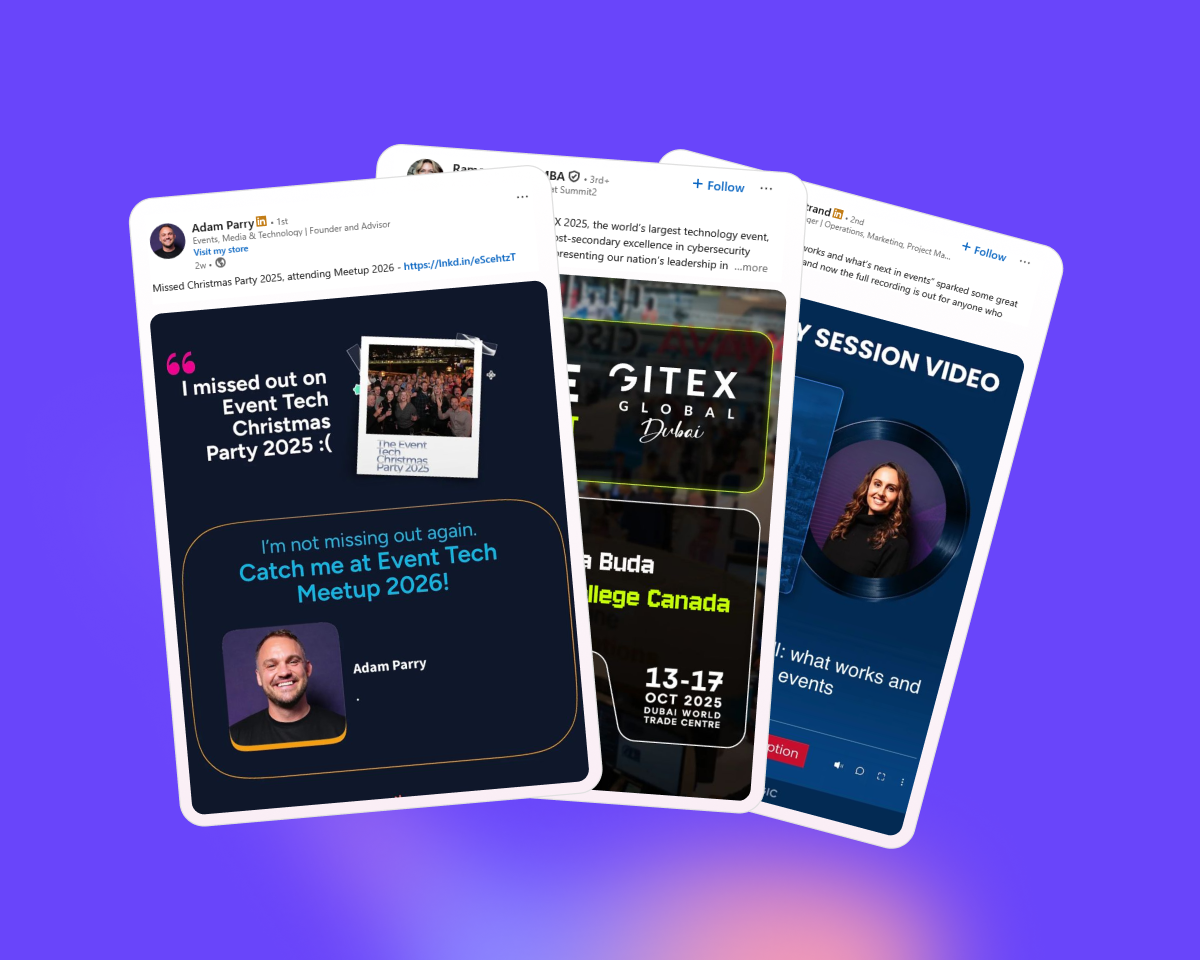
The link is the quiet hero of the kit. Speakers who can see "your posts drove 43 registrations" post again next year without being asked. Speaker campaigns can amplify session registrations by up to 40%, but only the tracked ones prove it.
The team comment template
The first hour of a LinkedIn post decides its reach. When a speaker posts, two or three of your team should comment substantively within the hour. Give them a starting point:
This session is one I'm personally looking forward to. [NAME]'s take on [TOPIC] at [PRIOR CONTEXT, e.g. "last year's roundtable"] changed how we think about it. See everyone there.
One rule: no two team members post the same comment. Assign angles (excitement, a question, a related resource) so the thread reads like conversation, not coordination.
The follow-up rule
If a speaker hasn't posted within two weeks, don't resend the same kit. Send something new from that amps up the FOMO: a countdown graphic, a "featured speaker" spotlight from the event's own channels they can reshare, or a stat about registrations for their session. Novelty restarts the conversation; reminders end it.
Copy the templates, swap the brackets, and send the kit this week. The difference between speakers who promote and speakers who don't is almost never the speaker. It's whether anyone made it this easy.
Want the asset generation and per-speaker tracking handled automatically? Check out Premagic →