
Your Photo Gallery is First-Party Data. Here's How to Read It
Every gallery view, download, and share is a behavioral signal about your attendees. Most teams never read it. Here's what it tells you.
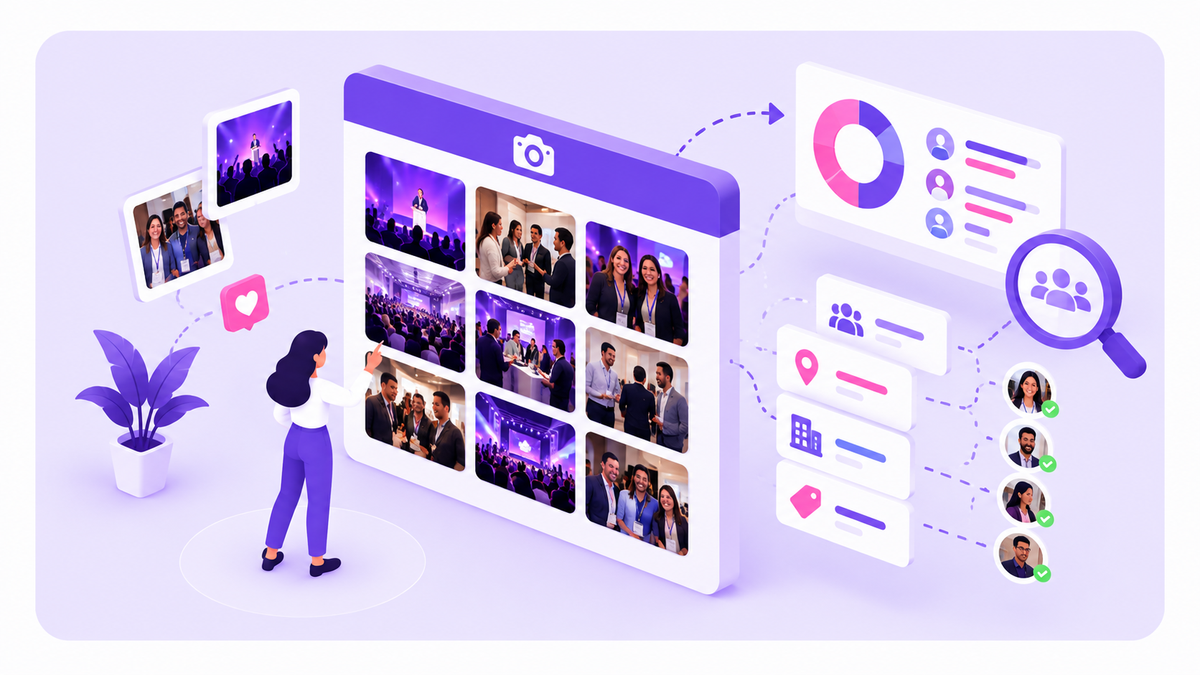
Quick quiz about your last event. Which attendees came back to your content in the week after it ended? Which sponsors earned actual eyeballs, not estimated ones? Which of your attendees are most likely to promote next year's edition?
If you ran a face-matched photo gallery, the answers already exist. They're sitting in the gallery's logs, disguised as operational noise.
Third-party data is dying, marketing budgets are demanding first-party proof, and event teams keep overlooking the richest first-party behavioral dataset they own: what thousands of identified attendees did with their event photos. Time to read it.
Why gallery data is different from your other event data
Registration data tells you who intended to come. Badge scans tell you who showed up. Gallery data tells you who cared: it's voluntary, repeated, post-hoc behavior from people identified by name, tied to specific content.
And the volume is real. At GITEX Global 2024, the gallery generated 29,093 views, 7,970 downloads, 3,798 face searches, and 509 direct social shares against 16,185 photos. Every one of those is a logged action by a knowable person. That's not a photo folder; that's a panel study you accidentally ran.
The five signals and what each one means
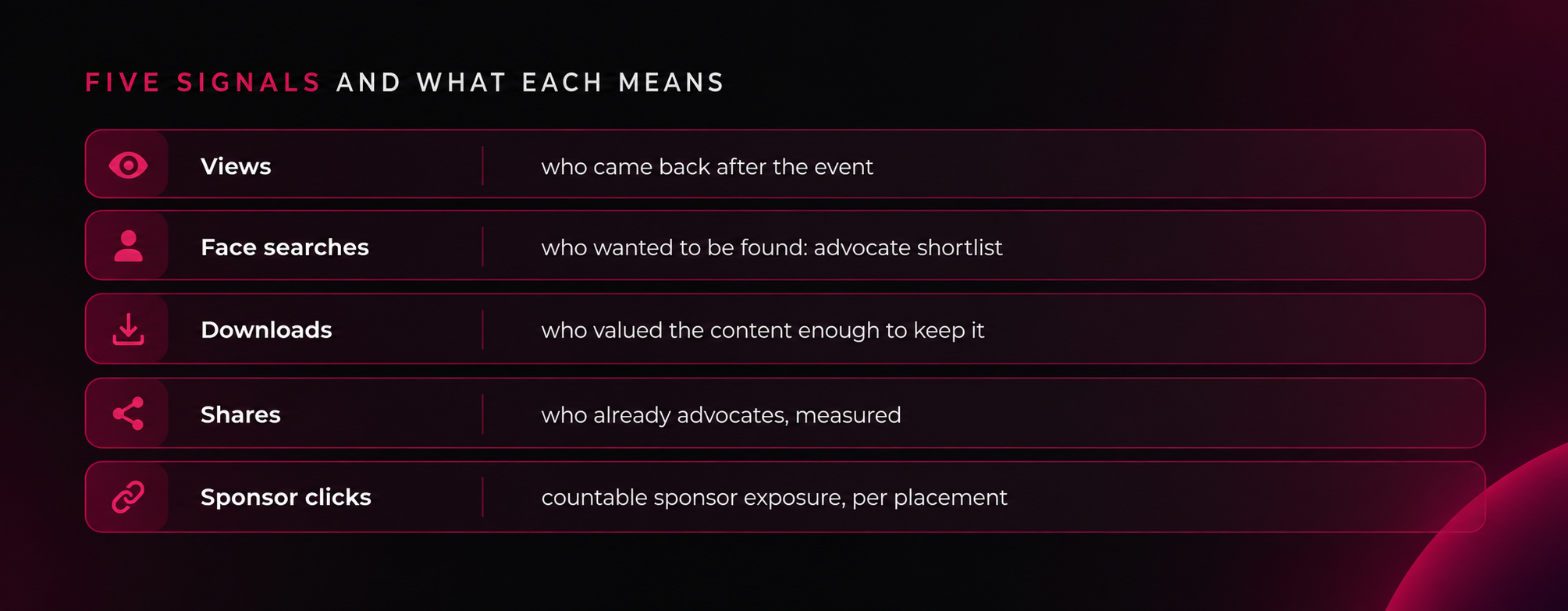
Views: who came back. A gallery visit after the event is re-engagement nobody asked for. Attendees who return (especially repeatedly, especially days later) are your warmest audience for next-edition marketing. Segment them.
Face searches: who wanted to be found. Someone searching for their own photos is expressing exactly the self-interest that powers advocacy. High face-search numbers signal an audience primed for personalized campaigns; the searchers themselves are your advocate shortlist.
Downloads: who valued it. A download is intent made concrete: this person wanted the content on their device. Download-to-view ratio is your best single gauge of whether the photography actually resonated (and whether the brief to "shoot people, not podiums" got followed).
Shares: who already advocates. Direct social shares from the gallery, the end goal of event photo distribution, are your measured advocates, no survey required. These attendees have demonstrated they'll carry your event to their network; next year they should be the first to receive posters, throwback campaigns, and referral links. This is how an advocacy program stops guessing at its seed list.
Sponsor interactions: who saw whom. If sponsor branding lives in the gallery (watermarks, placements, video), every view, click, and download of branded content is countable sponsor exposure. At the Middle East Event Show, that meant a sponsor report with 17,141 gallery views, 6,903 branded photo downloads, and 1,119 video clicks: numbers a finance team accepts, sourced entirely from gallery logs.
Three plays to run with it
The advocate seed list. Cross-reference sharers and repeat visitors; that's your top 10% by demonstrated enthusiasm. When registration opens for the next edition, they get the first throwback campaign: their own photos from this year, with a personal referral link so you can track the word-of-mouth registrations they drive. You're recruiting proven promoters, not hoping for volunteers.
The engagement-gap review. Compare gallery engagement across sessions, days, and activations. Photos from one workshop got triple the downloads of the keynote? That's attendee preference data your agenda committee will never get from a satisfaction survey, because it's what people did, not what they politely said.
The sponsor pricing model. Once sponsor exposure in galleries is measured per placement, you can price it per placement. "Gallery sponsor" becomes a sellable tier with its own analytics report, which is precisely how organizers are turning post-event content from a cost line into inventory.
One requirement, one caveat
The requirement: this only works if the gallery is instrumented, meaning per-attendee delivery and logged interactions, the default in platforms like Premagic but absent from a shared folder link, which records nothing. If your photos go out via a cloud-drive link today, you're not just losing engagement; you're deleting the dataset.
The caveat: this is personal data, so treat it with the same consent-first discipline as the face matching itself. Use it to serve attendees better and prove sponsor value, aggregate where possible, and keep your privacy promises boringly intact.
Your gallery has been answering questions all along. Start asking it some.
Want gallery analytics that turn photo engagement into advocate lists and sponsor reports? Check out Premagic →