How to repurpose conference content for a year of marketing
Your conference produced a year's worth of marketing content in three days. Here's the system for actually using it, month by month.
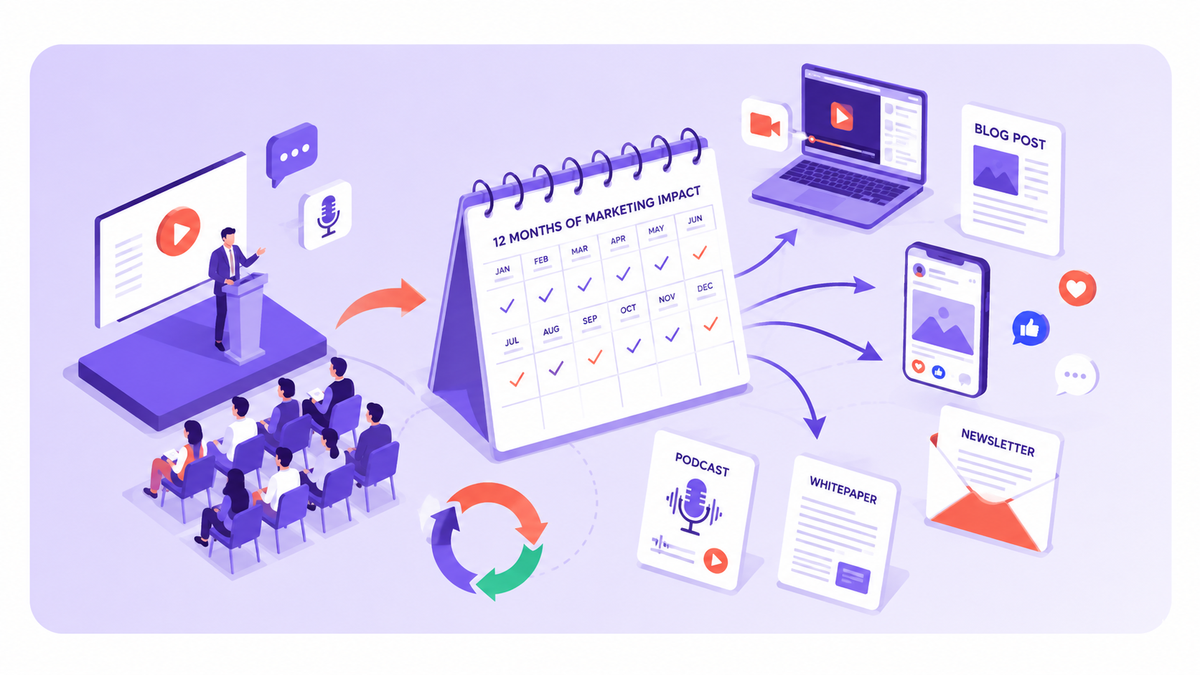
Three days of a conference can create more marketing content than most teams make in a year. Think about everything that gets captured: keynotes, panels, thousands of photos, hallway conversations, attendee posts, sponsor activations and more.
And yet, much of it ends up in the same place: a recap email, a “that’s a wrap” post, and a folder nobody opens again. Then, eleven months later, the same team starts promoting the next event from scratch.
That’s a lot of useful content going to waste. The good news is that you already have most of what you need. The trick is having a plan for using it throughout the year.
Start with what you have
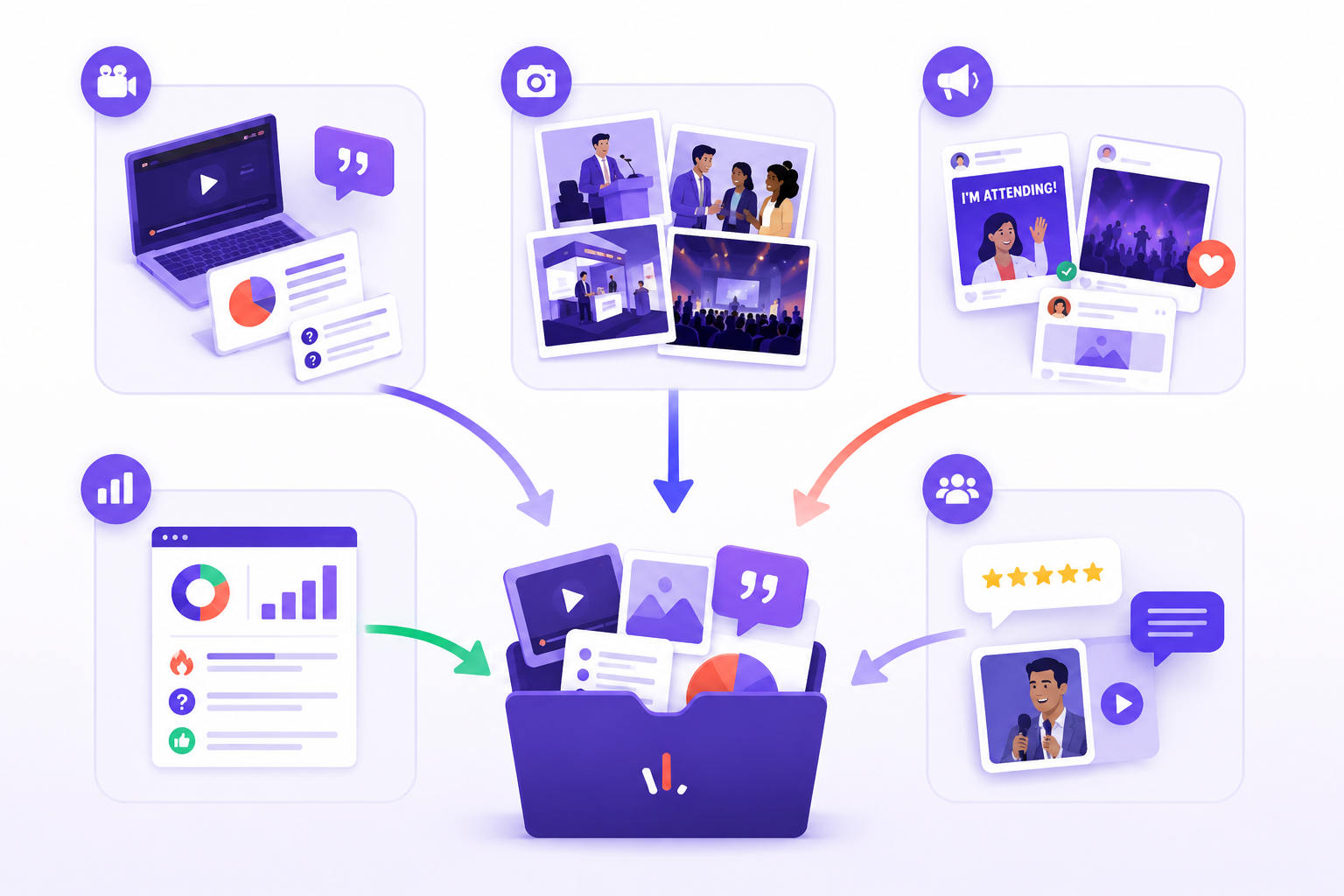
Before the event ends, make a list of everything you’re capturing. For a mid-sized conference, that could include:
- Session content: recordings, slides, speaker quotes and audience questions
- Photos: thousands of photos of speakers, attendees, exhibitors and sponsors
- Attendee-generated content: “I’m attending” posts, live photo shares and event recaps
- Data: popular sessions, questions people asked and what attendees engaged with
- Social proof: testimonials and conversations captured on camera or around the event
Two of these are often overlooked: photos and attendee content. Everyone knows to reuse keynote recordings and speaker clips, but the content created by attendees is just as valuable. It shows the event through the eyes of the people who were actually there, and people tend to pay more attention when they see themselves or people they know in the content.
If your attendees aren't posting much in the first place, start there. Here's how to get attendees posting about your event.
Turn one event into 12 months of content
You don't need to publish everything at once. A better approach is to spread the content across the year, giving your event a longer life instead of trying to squeeze all the value out of it in the first week.
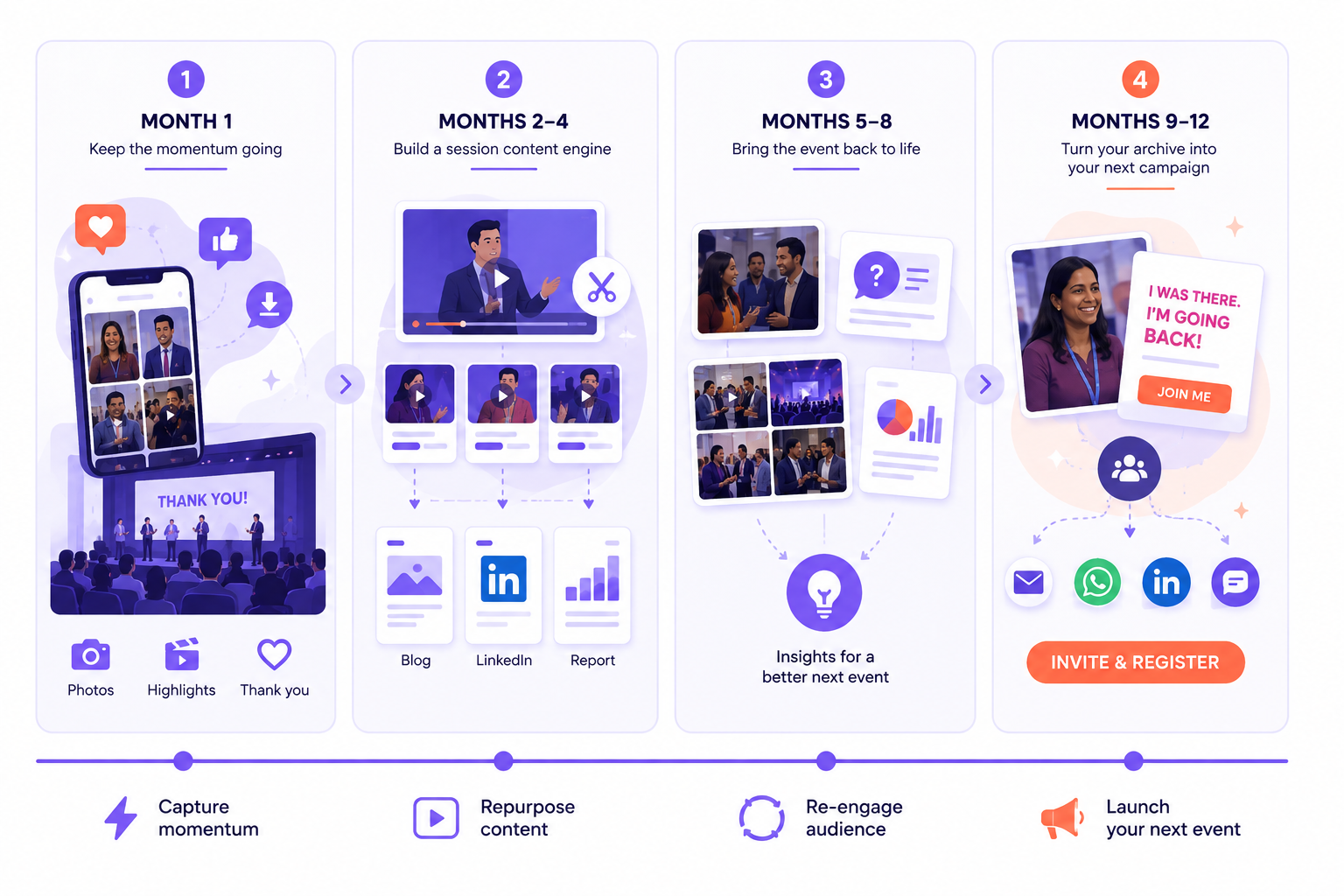
Month 1: Keep the momentum going
The first few weeks are when the event is still fresh, so this is the time to make the most of that momentum. Get attendees their personal photos as quickly as possible, ideally while the event is still happening or within a day of it ending.
Personal photos can drive a strong post-event sharing wave. At UmagineChennai, more than 18,000 delegates generated 17,840 photos, 5,230 downloads and 40,000+ impressions.
This is also the time to publish your highlight reel, your top moments and a thank-you post. Make the attendees the stars here. Show the people who made the event what it was, rather than filling every post with the stage and branding.
Months 2–4: Build a session content engine
You probably recorded hours of talks, so don't let those recordings sit on a hard drive. Break keynotes and panels into short clips, with each clip focused on one useful idea or takeaway, and publish one or two each week.
You can also turn your best sessions into blog posts, LinkedIn posts or an industry report. Tag the speakers when you publish their clips. They have a reason to share them too, because the content also builds their own profile. A 30-minute keynote can become weeks of useful content when you break it down thoughtfully.
Months 5–8: Bring the event back to life
By months five to eight, most events have disappeared from the conversation. This is where your archive can do some of its most useful work. Bring back some of the best photos with simple “Remember this?” posts, create themed photo collections, revisit interesting conversations from the event, or turn questions attendees asked into new content.
You can also use what you learned from the event to shape the next one.
For example:
“You asked for more sessions on AI. Here's what we're adding to next year's agenda.”
Now your old event is helping you build the next one. The archive becomes part of the planning process, rather than something that gets forgotten once the event is over.
Months 9–12: Turn your archive into your next campaign
When registration opens for the next edition, don't start with a blank page. Go back to last year's attendees and give them their own photos from the previous event. Turn those memories into personalised “I was there, I'm going back” content and add a referral link so they can invite someone from their network to join them.
Your old event content now becomes part of your new registration campaign. That's event advocacy marketing in action.
Platforms like Premagic can automate this using face-matched photo archives, so organisers don't have to manually search through thousands of photos to find the right one for every attendee.
Why personal content can beat polished content
Here's something that goes against what most marketing teams expect: the professionally produced highlight reel isn't always the piece of content that drives the most interest. Sometimes it's a slightly imperfect photo of six people laughing around a table.
That's because people aren't just looking for production quality. They're looking for a sense of belonging. “People like me go to this event” can be a much stronger message than “Look how impressive our event was.”
There's evidence behind this too. Freeman's latest research found that 70% of attendees rank in-person events as their top source of professional learning, ahead of webinars, on-demand platforms and social channels. The report also points to an important gap: attendees value interaction, discussion and practical takeaways, but many event experiences still rely heavily on passive, lecture-style formats.
That makes the content you capture around the sessions just as important as the sessions themselves. Your content should show what people learned, through session clips and insights, and how they experienced it, through photos, attendee stories and conversations. For every polished piece of content, try publishing a few that feel more human.
Make content capture part of the event plan
The biggest content mistakes usually happen before the event is over. If your photographer only captures the stage, you won't have much attendee content later. If sessions aren't recorded, there are no clips to repurpose. And if attendees aren't given easy ways to share their experience, you won't have much attendee-generated content to work with.
So brief your team with the next 12 months in mind. Capture the people, not just the stage. Record the sessions, save the best quotes and collect attendee posts. Give people personalised content they actually want to share.
The goal isn't to create more content. It's to get more value from the content you're already creating. One conference can give you enough material for an entire year of marketing. The events that seem to be everywhere all year aren't necessarily creating more content. They're simply making better use of what they already captured.
Want to see how a face-matched photo archive can become part of your next registration campaign? Let's talk!